


Spotting is light vaginal bleeding that occurs outside of your regular menstrual cycle. Unlike a period, spotting is usually very light, appearing as faint specks or a light smear of blood, with colors ranging from pale pink to bright red or even brown.
While some spotting is harmless and related to hormonal changes like ovulation or early pregnancy, chronic or unexplained spotting may signal underlying issues, like , polyps, hormonal imbalance, infection, or, in rare cases, cancer.
Knowing what spotting is and its causes helps determine when medical attention may be necessary.
Spotting Appearance & Color Guide
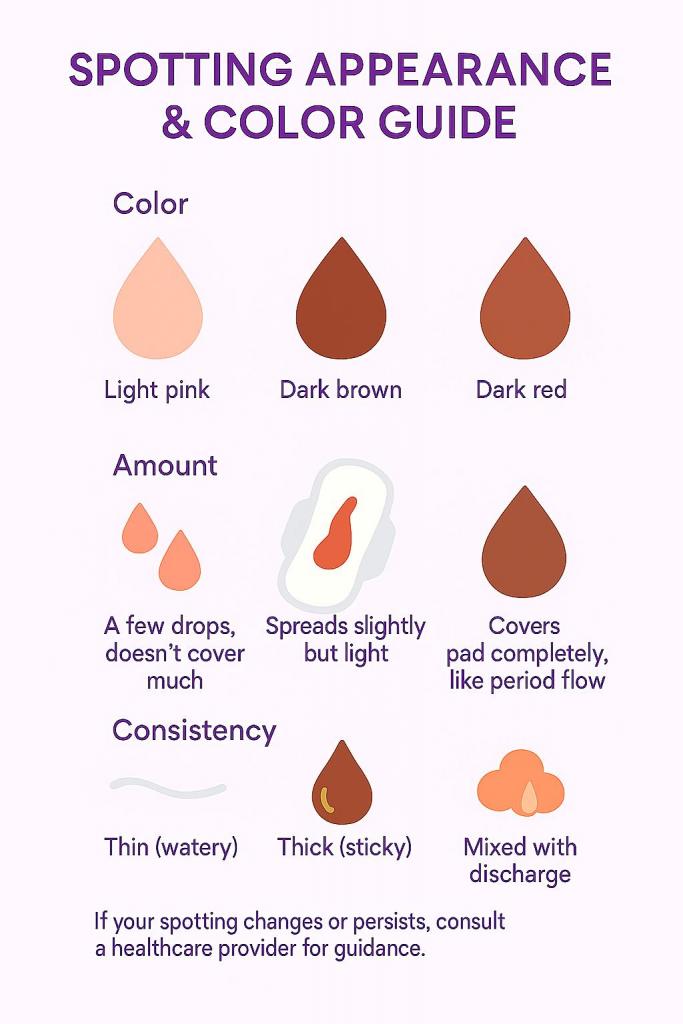
Spotting can look and feel different for each person depending on its cause. When figuring out what spotting does look like, pay attention to the color, amount, and consistency.
The color of spotting can offer insight into your health, providing clues about hormone fluctuations and your menstrual cycle stage. For example, light pink spotting is usually fresh, diluted blood mixed with cervical mucus. Brown or rust-colored vaginal spotting is older blood that has oxidized before exiting the body.
Vaginal spotting is typically light, so you may notice a streak of blood or a faint stain in your underwear. It usually doesn’t contain large clots and may appear slightly watery or mixed with normal vaginal discharge.
In most cases, spotting has little to no odor, and cramping is usually mild, if present. However, symptoms such as a strong or unusual odor, sharp or worsening pelvic pain, fever, or dizziness are signs that you should seek medical attention immediately.
How Do You Know It’s Spotting and Not Your Period?
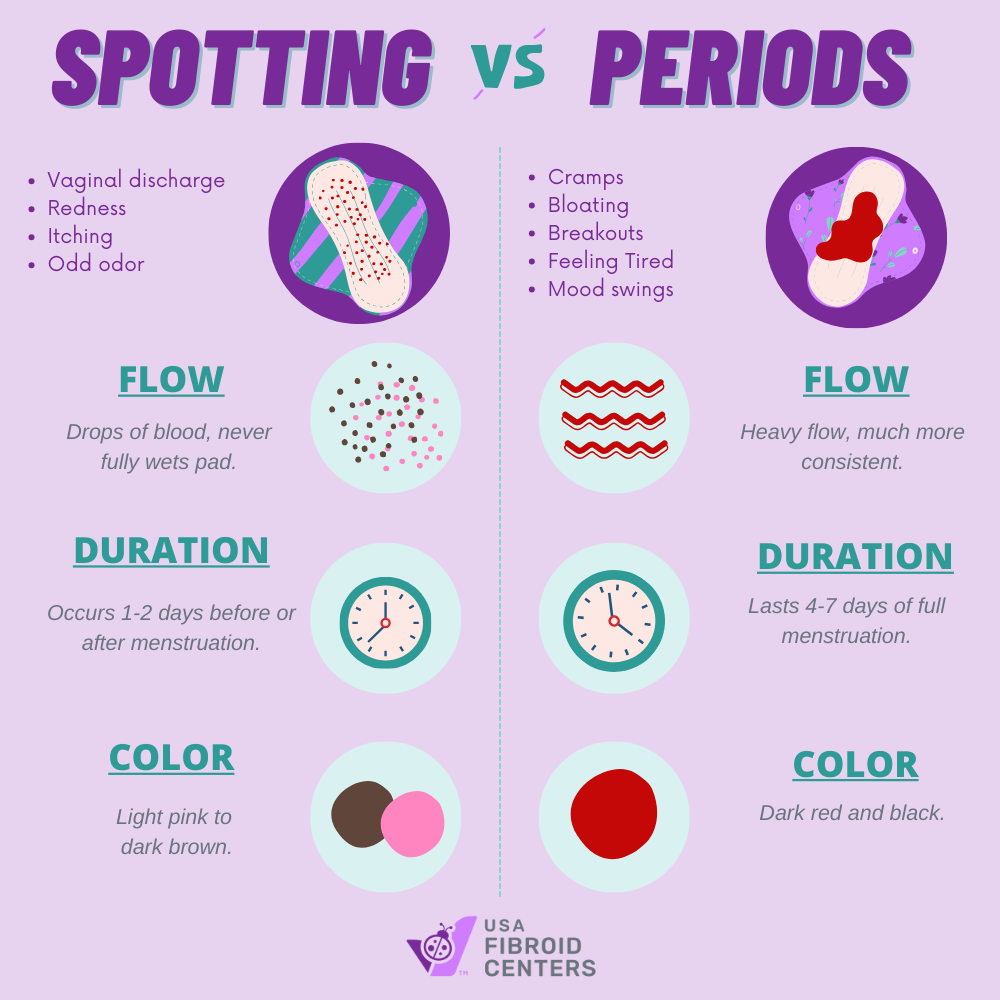
It can be challenging to tell the difference between spotting vs. a period, especially if you have lighter periods. However, there are a few significant differences.
Spotting is vaginal bleeding that is typically less than two tablespoons (30 milliliters) per day. A period is a more significant amount of vaginal bleeding, with enough blood to soak through a pad or tampon every few hours.
One of the main signs of spotting not on period is the timing. Spotting can occur before or after your period, or at times in your cycle when you would not normally expect menstrual bleeding. Spotting before a period is usually due to the initial breakdown of the uterine lining, which can result in a small amount of blood. After a period, spotting can occur due to the expulsion of the remaining uterine lining that is not fully shed during menstruation.
Understanding what spotting is and paying attention to when it occurs during your cycle can help you determine the cause of the bleeding.
Is Spotting Common?
Spotting is common and can occur during ovulation, when using new or adjusting birth control, or even during early pregnancy. It will generally be light, brief, and infrequent.
However, spotting is more concerning when:
- It lasts more than a few days
- Occurs frequently between cycles
- Happens after menopause
- Is accompanied by pain or a strong odor
If persistent, spotting can also be a symptom of uterine fibroids. Our symptom checker can help you determine whether fibroids are the cause, and if it’s time to consult a specialist.
How Long Does Spotting Last?
Spotting can last from a few hours to a few days, depending on the underlying cause. For example, spotting during ovulation usually lasts only one to two days and is linked to normal hormonal shifts mid-cycle.
Spotting from hormonal imbalances or uterine fibroids can occur more frequently or persist over a longer timeframe, sometimes appearing between cycles or recurring month after month. Persistent spotting warrants consulting a medical professional to determine whether underlying conditions, such as fibroids, may be the cause.
Causes of Spotting
Spotting can result from physiological and hormonal causes like perimenopause or early pregnancy, or gynecological conditions like fibroids and adenomyosis. Medication and contraception can also lead to breakthrough bleeding, but no period, especially when starting or stopping birth control, missing pills, or adjusting to an IUD.
What Spotting Means When It Happens
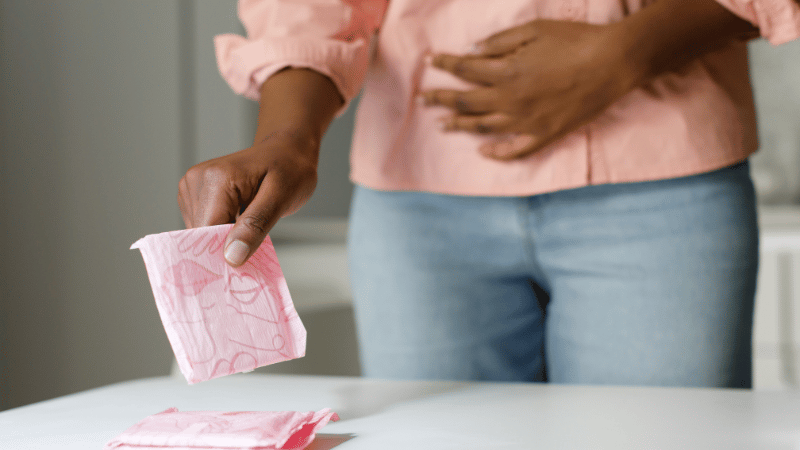
Spotting can occur at different times throughout the menstrual cycle and during early pregnancy due to hormonal changes.
Spotting During Ovulation
If conception does not occur, estrogen levels drop in the middle of your cycle, right before ovulation. This decrease can cause light spotting, which is often pink or brown. Spotting during ovulation is usually harmless and lasts one to two days. If there is frequent spotting right before ovulation, though, monitor whether you experience other symptoms alongside the spotting, like cramping.
Spotting Right Before a Period (Pre-Menstrual Spotting)
Spotting can look like a regular period, especially if you are spotting before your period. Pre-menstrual spotting often appears light brown or rust-colored as the uterine lining begins to shed in the days leading up to your period.
It can be triggered by:
- Hormone fluctuations: A slight drop in progesterone during the can partially destabilize the uterine lining before your period.
- Contraception: Inconsistently using birth control or reaching the end of a cycle for the ring or patch can cause “breakthrough” bleeding. IUDs can cause spotting, but no period, especially during the adjustment period right after getting it inserted.
- Uterine Fibroids: Growths like fibroids or polyps can cause chronic irritation of the uterine lining, leading to bleeding right before your period.
Spotting before a period is usually light and transient. However, if it occurs every cycle, lasts several days, or is accompanied by symptoms such as heavy flow or pain, it’s time to consult a medical professional.
Spotting Appearance After a Period
Although it can be hard to tell whether you’re spotting or continuing your period, it is possible to have light brown spotting after menstruation. This type of spotting is often leftover blood and is completely normal.
Tracking your menstrual cycle helps you identify potential patterns and determine whether you’re spotting and what it means. Recording the timing, color, and amount of spotting, along with accompanying symptoms such as pelvic pain or odor, is valuable for understanding whether it is a regular part of your cycle or a potential issue.
Spotting Related to Fibroids: Symptoms, Evaluation, and Treatment Options
Spotting is a common symptom of uterine fibroids, which are noncancerous growths in the uterus. Fibroids can irritate the uterine lining, causing irregular bleeding, spotting, or heavy menstrual bleeding.
Fibroid specialists can diagnose fibroids using imaging such as ultrasound or MRI to determine their size and location. Once a diagnosis is confirmed, your fibroid specialist will create a personalized treatment plan. For individuals seeking nonsurgical solutions with a short recovery time, uterine fibroid embolization (UFE) is a treatment option that can shrink fibroids and relieve symptoms. USA Fibroid Centers has expert specialists who perform UFE as a minimally invasive procedure that targets the blood supply to fibroids to reduce bleeding and improve quality of life.
When to See a Doctor About Spotting
In many cases, vaginal spotting is normal, but it can also signal underlying issues such as fibroids.
You should seek care if spotting:
- is frequent or unpredictable
- becomes heavier over time
- occurs after menopause
- is accompanied by pain, weakness, dizziness, or fatigue
If you are worried that your spotting or other symptoms might indicate fibroids, schedule a consultation at USA Fibroid Centers for a proper diagnosis.
If you have already been diagnosed with fibroids and are experiencing painful, uncomfortable symptoms, our fibroid specialists can help you determine if uterine fibroid embolization (UFE) is right for you.
Call Now to Schedule a Consultation
FAQs
What Does Spotting Mean?
Spotting is light bleeding that occurs outside of a regular menstrual cycle. It can result from hormonal fluctuations like menopause or pregnancy, or from conditions like uterine fibroids.
How can I tell if I’m having a Light Period vs. Spotting?
You can tell the difference between spotting vs. a period by the amount of blood. Bleeding during spotting is usually less than two tablespoons (30 milliliters), while a period usually requires a pad or tampon to manage blood flow.
Can stress cause spotting?
Stress can cause spotting by affecting hormone levels, disrupting estrogen or progesterone, and triggering changes in your cycle.
Is spotting normal during perimenopause?
Spotting during perimenopause is normal, since hormone levels fluctuate during this stage. Spotting caused by perimenopause and menopause is usually not harmful and does not require treatment.