

Medically reviewed by
USA Fibroid Centers Medical Review Team
Experienced interventional radiology specialists
Doctors classify fibroids as small, medium, or large based on their diameter, and size is one of several factors, along with location and number, that can shape symptoms and treatment options. Large fibroids are generally 10 cm or larger, about the size of a grapefruit or bigger, though a fibroid does not need to be large to cause symptoms.
Quick facts
Fibroid Size Classifications
Fibroids can affect different parts of the body depending on their size, classification, and location.[1]
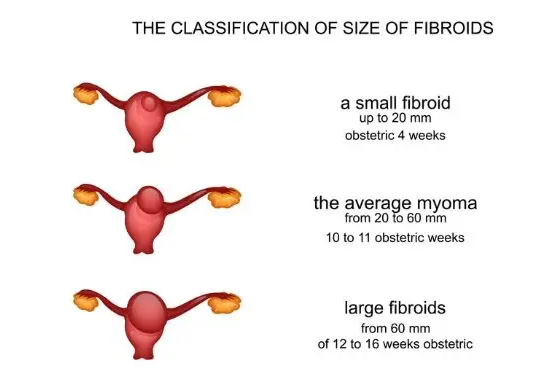
Uterine fibroid size falls under three categories:
Small Fibroids
About 1 cm to 5 cm in diameter (roughly 0.4 to 2 inches), comparable to a seed or a cherry. Small fibroids often cause no symptoms, though location can still make them relevant if they sit near the uterine lining.
Medium Fibroids
Ranges from 5 cm to 10 cm in diameter (about 2 to 4 inches), comparable to a plum or an orange. This is also where the average uterine fibroid size falls.
Large Fibroids
Exceed 10 cm in diameter (over 4 inches), ranging from the size of a grapefruit to a watermelon.[2] Large fibroids are more likely, though not guaranteed, to press on nearby organs and cause noticeable symptoms.
Understanding the Dominant Fibroid
Many women have more than one fibroid at a time, and sizes can vary widely between them. When multiple fibroids are present, doctors often refer to the dominant fibroid, meaning the largest one, since it tends to have the greatest influence on symptoms and treatment planning. A fibroid specialist will typically evaluate the overall fibroid burden, meaning the total number and combined size of all fibroids present, rather than focusing on a single measurement alone.
Uterine Fibroid Size Chart
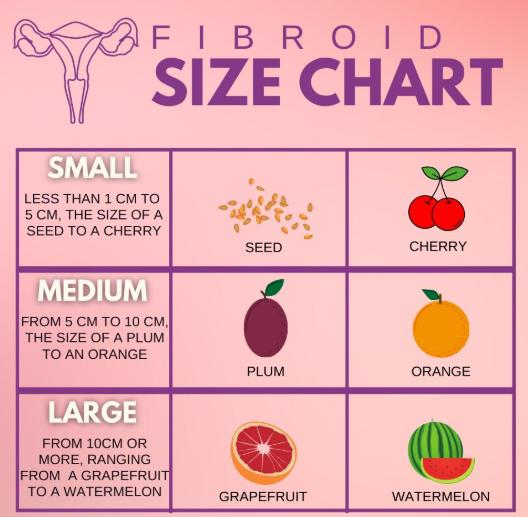
Click on the chart above to see actual fibroid images
How Are Fibroid Sizes Measured?
Fibroid size is most often measured using imaging tests that give a specialist a detailed view of the uterus.[3]
- Ultrasound: Typically the first imaging step. It uses sound waves to estimate the size, number, and general location of fibroids and is often sufficient for routine monitoring.
- MRI: May be used for a more detailed view, particularly for larger fibroids, multiple fibroids, or fibroids in complex locations where precise mapping affects treatment planning.
Note: Measurements are usually recorded in centimeters (cm) or millimeters (mm), where 1 cm equals 10 mm. Because different imaging methods and providers may describe size slightly differently, it’s normal for measurements to vary a little between visits.
Which Size of Fibroid Is Normal?
The average uterine fibroid size falls between 5 cm and 10 cm, placing most fibroids in the medium category.[1] There is no single “normal” size, however. Size can influence symptom severity, but it is not the only factor. Location within the uterus and the number of fibroids present also shape how a person experiences fibroids.
Which Size of Fibroid Is Dangerous?
Uterine fibroid size alone does not always correlate directly with symptom severity. Even small fibroids may cause significant issues depending on their location, particularly if they sit near the uterine lining. That said, large to medium-sized fibroids can impact surrounding organs by expanding the abdominal area to resemble pregnancy, causing frequent urination, difficulty fully emptying the bladder, or constipation.
Our fibroid doctors use imaging studies, such as ultrasounds or MRIs, to accurately assess a fibroid’s size, number, and location and determine the most appropriate course of treatment for each patient. Schedule a consultation today to learn more about your treatment options.
Do Certain Fibroid Sizes Cause More Pain?
Fibroid-related pain can occur regardless of size, but larger fibroids are more likely to press against surrounding organs, leading to increased discomfort, cramping, and pelvic pressure. Even small fibroids can cause significant pain depending on where they sit within the uterus.
If left untreated, fibroid pain can worsen over time, especially as fibroids continue to grow. In some cases, large fibroids may outgrow their blood supply and begin to break down, a process known as fibroid degeneration. This can cause sudden, sharp abdominal or pelvic pain that feels different from typical menstrual cramping. Fibroid degeneration is not the same as regrowth. It happens when fibroid tissue starts to die from a lack of oxygen, which can bring temporary relief in size but often comes with a painful flare. Anyone experiencing sudden, severe pelvic pain should be evaluated promptly to rule out other causes and confirm the diagnosis. Early treatment can help relieve pain and reduce the chance of repeated degeneration episodes.
What Size Fibroid Needs to Be Removed?
If you’re wondering whether a fibroid needs to be removed, the answer depends on more than size alone. Fibroids vary widely, from as small as a seed to as large as a melon, but their real-world impact is shaped by location and the symptoms they cause, not just their measurement on a chart.
While fibroid size can fluctuate somewhat over time, significant and consistent shrinkage without treatment is uncommon. Most fibroids do not shrink on their own, and waiting for that to happen is not considered a reliable management strategy.
Considerations for Fibroid Removal
- Persistence of Symptoms: Many women continue experiencing symptoms despite hormonal changes, such as those approaching menopause. Fibroids do not consistently respond to hormonal shifts with a lasting reduction in size.
- Hormonal Influence: Hormones can influence fibroid growth, but changes in hormone levels are not guaranteed to produce substantial or lasting shrinkage. The degree of influence varies from person to person.
- Clinical Monitoring vs. Treatment: Rather than waiting for unpredictable changes, fibroid specialists typically monitor growth through imaging and base treatment decisions on size, location, and symptom severity together.
If you’ve been diagnosed with fibroids, or suspect you may have them, visiting a fibroid specialist is the most reliable way to understand your options. Interventional radiologists at USA Fibroid Centers can assess your health and recommend the most appropriate treatment, regardless of the size or number of fibroids present.
Can Uterine Fibroid Embolization Treat All Sizes?
Uterine Fibroid Embolization (UFE) is a minimally invasive, non-surgical procedure that can treat fibroids of nearly any size or location within the uterus.[3] It offers a proven alternative to traditional surgical approaches, with several distinct benefits:
- Comprehensive Treatment: UFE can target fibroids of any weight and size, from small nodules to large masses.
- Multi-Fibroid Approach: UFE addresses the entire uterine blood supply at once rather than removing fibroids individually, which makes it well suited for patients with multiple fibroids of varying sizes.
- Location Flexibility: Fibroid location within the uterus influences treatment planning, and UFE can reach fibroids in challenging areas, including those near the uterine lining or on the outer surface.
- Preservation of Uterine Tissue: Unlike hysterectomy, which removes the entire uterus, UFE preserves the uterus. This allows patients to retain their reproductive organs while managing fibroid-related symptoms, so fertility and hormone production are not disrupted by the procedure itself.
- Reduced Recovery Time: Because UFE is minimally invasive, most patients experience a shorter recovery than with traditional surgery and return to normal activities more quickly.
- Symptom Relief: Clinical studies and patient experiences consistently point to UFE’s effectiveness in reducing heavy menstrual bleeding, pelvic pain, and pressure by addressing the fibroid’s blood supply directly.
Because UFE can treat fibroids across the size spectrum, from small to large, and regardless of how many are present, it remains one of the more versatile non-surgical options available for women managing fibroid symptoms.
Getting the Right Diagnosis for Your Fibroid Size
Fibroid size is one piece of a larger picture. Location, number of fibroids, and the symptoms you are experiencing all shape which treatment path makes sense, which is why an accurate diagnosis matters more than the measurement alone. An ultrasound or MRI can confirm size and location, giving your specialist the detail needed to recommend an appropriate next step, whether that is monitoring or treatment such as UFE.
At USA Fibroid Centers, our interventional radiologists diagnose and treat uterine fibroids of all sizes at outpatient centers nationwide.
Visit our location page to find a center near you, call us at 855.615.2555, or schedule your initial appointment online today.
FAQs About Fibroid Sizes
Treatment option: UFE
Knowing the Size Is a Start. Understanding Your Options Is the Next Step.
A size chart can tell you where your fibroid falls, but it cannot tell you how it may be affecting your body or which treatment path fits your goals.
Uterine fibroid embolization is a minimally invasive, outpatient option that can be used across fibroid sizes, without the recovery time associated with surgery.
- USA Fibroid Centers, “Understanding Fibroid Sizes,” usafibroidcenters.com/uterine-fibroids/fibroid-sizes/
- WebMD, “Uterine Fibroids Overview,” webmd.com/women/uterine-fibroids/ss/slideshow-fibroid-overview
- Society of Interventional Radiology, “Uterine Fibroid Embolization,” sirweb.org/patients/uterine-fibroids/
Medical Disclaimer: This article provides educational information about uterine fibroid sizes and treatment options. It is not a diagnosis or medical advice. Only a qualified fibroid specialist can determine whether you have fibroids or recommend appropriate treatment. If you have heavy periods, pelvic pain, or other symptoms, consult a healthcare provider or contact USA Fibroid Centers for an evaluation.