


October is Breast Cancer Awareness Month, which is a time when many women schedule mammograms, check in with their doctors, and think more carefully about their health. But for millions of women living with uterine fibroids, this month is also a reminder that breast health and fibroid health are more connected than most people realize. The link between them is hormonal, and understanding it can help you take a more proactive approach to your overall well-being.
What Do Fibroids and Breast Health Have in Common?
Uterine fibroids are the most common noncancerous tumors in women of reproductive age, affecting up to 80% of women at some point in their lifetime. They range from small, undetectable growths to large masses weighing several pounds. While they are not cancerous, fibroids can cause significant symptoms that affect quality of life.
Estrogen is the primary driver of fibroid growth. It is also the hormone most closely associated with cyclical breast changes — swelling, tenderness, and sensitivity that many women notice before their period. When estrogen levels fluctuate or remain elevated, both fibroid growth and breast tissue changes can intensify.
The Link Between Fibroids and Breast Cancer
Hormones play a significant role in both fibroids and breast cancer development. Recent studies suggest a potential link between these two conditions.
Several factors can influence estrogen levels, including:
- Age and timing of menopause (a longer reproductive window means longer estrogen exposure)
- Body weight (estrogen is produced in fat cells, so higher body weight can mean higher estrogen levels)
- Family history of fibroids or hormone-sensitive conditions
- Reproductive history, including the age at which menstruation began
- Underlying conditions such as polycystic ovary syndrome (PCOS) or endometriosis
The Research on Fibroids and Breast Cancer Risk
Emerging research [1] suggests a potential connection between uterine fibroids and breast cancer risk. Studies indicate that shared hormonal factors — elevated estrogen, genetic predisposition, and the hormone prolactin, which is produced by the pituitary gland and can stimulate cell growth — may play a role in both conditions. Women with a family history of either fibroids or breast cancer may face a higher likelihood of developing both.
It is important to note that having fibroids does not mean you will develop breast cancer. These are distinct conditions, and the research is still evolving. If you have concerns, the most important step is to discuss your personal risk with your healthcare provider, who can recommend appropriate screening and monitoring.
Estrogen: A Key Player in Women’s Health
is a hormone that plays a key role in many aspects of female health. Understanding the role estrogen has in the development of several health conditions, can help women be proactive about their health.
Factors Affecting Estrogen Levels:
- Age: Estrogen levels naturally decline with age. However, women who go through menopause later in life have a longer exposure to estrogen, which can increase their risk of developing certain conditions.
- Weight: Estrogen is produced in fat cells, so women who are overweight have higher estrogen levels.
- Genetics: Women with a family history of fibroids or breast cancer are more likely to develop these conditions.
- Reproductive history: Women who start menstruating early and go through menopause late are more likely to develop fibroids.
- Certain medical conditions: Some medical conditions, such as polycystic ovary syndrome (PCOS) and endometriosis, can cause estrogen levels to rise.
Learn more about how high estrogen levels can impact the growth of uterine fibroids.
Fibroids’ Top Warning Signs
Fibroids do not always cause symptoms, but when they do, a range of symptoms can include

Signs of fibroids include:
- Heavy menstrual bleeding
- Prolonged periods
- Pelvic pain or pressure
- Frequent urination
- Constipation
- Backache
- Pain during sexual intercourse
- Enlarged abdomen
If you have any of the symptoms listed above, it is important to see a doctor to rule out fibroids or other underlying medical conditions.
Take our Fibroid Symptom Quiz and Connect with A USA Fibroid Specialist
What You Can Do This October
Breast Cancer Awareness Month is a good opportunity to take stock of your health on both fronts. If you have been experiencing fibroid symptoms, or if you are due for a mammogram or breast exam, this month is a natural prompt to schedule both.
For breast health concerns, start with your primary care physician or a breast health center. They can arrange appropriate screenings, imaging such as mammograms or ultrasounds, and referrals if needed.
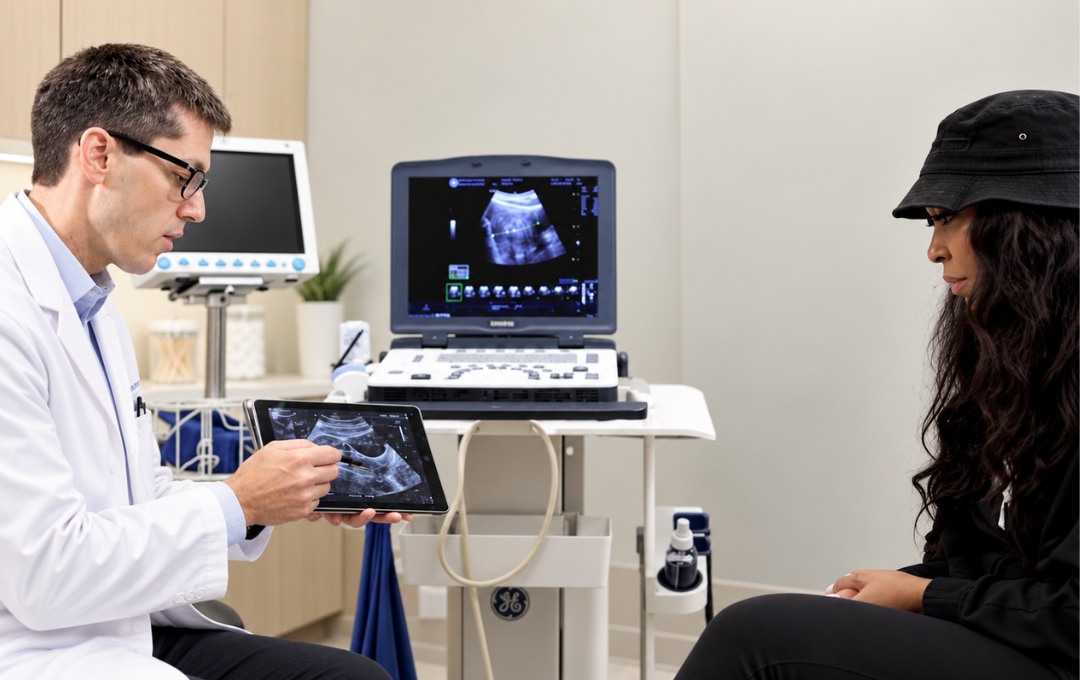
For fibroid diagnosis and treatment, the specialists at USA Fibroid Centers are interventional radiologists who use advanced imaging — including ultrasound and MRI — to accurately assess the size, location, and type of fibroids you have. From there, they can help you understand your options, including Uterine Fibroid Embolization (UFE).
UFE: A minimally Invasive Treatment
UFE is a proven, minimally invasive procedure that shrinks fibroids without surgery.

Benefits of UFE include:
- Less pain and scarring compared to myomectomy or hysterectomy
- Same-day discharge and a return to normal activity within a couple of weeks
- Preservation of the uterus and fertility
- A low risk of complications
Take the Next Step
If you are experiencing fibroid symptoms or have questions about your risk, do not wait. Early detection and treatment lead to better outcomes.
Call USA Fibroid Centers at 855.615.2555 to schedule a consultation, or use our online tool to find a fibroid specialist near you. You can also take our Fibroid Symptom Quiz to better understand what you may be experiencing.
Find a Fibroid Specialist Near You