


Receiving a uterine fibroid diagnosis can bring up a mix of complex emotions, from relief at finally identifying the source of your symptoms to uncertainty about what comes next. If you are preparing for an upcoming appointment, it is completely normal to feel a bit overwhelmed. Knowing how to talk to a doctor about reproductive health requires preparation, and learning how to calm nervousness at doctors‘ offices often starts with having a clear, structured plan in hand.
Going into an appointment with a clear list of questions to ask your doctor can help patients better understand their condition and feel more confident discussing care. By talking to your doctor about uterine fibroids with a structured plan, you can cut through the medical jargon, reduce anxiety, and feel more confident as you navigate the next steps for diagnosis, treatment, and long-term care.
This guide is designed to help you prepare for that conversation, ensuring you leave the office with a clear roadmap for your health.
What Questions Should I Ask My Doctor About Fibroids?
Every woman’s health journey is unique, and your medical consultations should reflect your individual concerns. Talking to your doctor about uterine fibroids and gathering targeted answers about your diagnosis, anatomy, and lifestyle goals ensures you remain the primary advocate for your own wellness.
Use the following checklist as a natural lead-in to guide your conversation and map out your next steps. These are the critical questions to ask a doctor about fibroids and the most vital questions about uterine fibroids to bring to your visit:
1. Are My Symptoms Likely Being Caused by Fibroids?
Fibroid symptoms often mimic other pelvic conditions, but they typically center around disruption and pressure. While everybody is different, you are more likely to be dealing with fibroids if you experience:
- Abnormal Bleeding: Periods that last over a week or are heavy enough to interfere with daily activities.
- Persistent Pressure: A constant feeling of fullness or “heaviness” in the pelvic area, rather than sharp, temporary cramps.
- Bladder or Bowel Changes: Frequent urges to urinate or bouts of constipation caused by the fibroid pressing against internal organs.
- Lower Back Pain: Dull, aching pain that radiates to the back or legs.
Since these signs overlap with conditions like endometriosis, a pelvic ultrasound is the best testing option to confirm the presence of fibroids.
2. Are There Different Types of Fibroids?
There are several different types of fibroids, and they are classified by where they grow in or on the uterus.
- Intramural: Grow inside the muscular uterine wall. They are the most common and cause heavy periods and pelvic fullness.
- Subserosal: Grow on the outside of the uterus. They press on surrounding organs, leading to frequent urination or back pain.
- Submucosal: Grow just under the inner lining of the uterine cavity. Even small ones can cause severe bleeding and fertility issues.
- Pedunculated: Grow on a small stalk or stem inside or outside the uterus, which can cause sharp pain if it twists.
Asking your doctor which fibroid type you have matters immensely, as the location directly dictates the severity of your pain, the impact on your cycles, and which treatments will be the most effective.
3. What Size Are My Fibroids and Are They Growing?
Because fibroids are hormone-driven, they can range in size from a tiny seedling to a large grapefruit—and their growth rate can be highly unpredictable. To understand exactly what is happening inside your body, you need to get clear answers directly from a specialist.
At your appointment, ask about the exact size of their fibroids. Other important questions about uterine fibroids include:
- Where exactly are they located? (A small fibroid pressing on your bladder can cause more symptoms than a larger one located on the outside of the uterus).
- Do their current sizes pose any immediate health risks?
- What causes fibroids to keep growing?
- What is the hardest fibroid to remove?
- Based on this mapping, what is our proactive next step?
4. Could My Fibroids Affect Fertility or Pregnancy?
If you have uterine fibroids, you should ask your doctor how their specific size and location might affect your ability to get pregnant and carry a baby to term. If any of your fibroids are submucosal (meaning they grow inside the uterine cavity), they can interfere with conception or embryo implantation.
During your consultation, you should also ask if your fibroids are likely to grow during pregnancy, whether they could increase your risk of complications like pelvic pain or preterm labor, and what your specific plan should be for monitoring or treating them before you attempt to conceive.
5. What Kind of Treatment Preserves My Ability to Get Pregnant?
If pregnancy is a future goal, this should be at the center of your consultation. Certain fibroids, especially submucosal fibroids, can alter the shape of the uterine cavity, interfering with embryo implantation or increasing the risk of premature delivery and miscarriage. Minimally invasive treatments like uterine fibroid embolization (UFE) offer a higher probability of preserving your uterus and protecting your ability to plan for a future pregnancy.
6. Can Fibroids Become Cancerous?
Uterine fibroids are almost always benign (non-cancerous) tumors made of smooth muscle tissue. Having fibroids does not increase your risk of developing uterine cancer, and a benign fibroid does not “turn into” cancer over time. However, since certain uterine cancers mimic fibroid signs, discussing your symptoms with your fibroid specialist can help you find out if you have fibroids or something else.
7. What Fibroid Treatment Options Are Available?
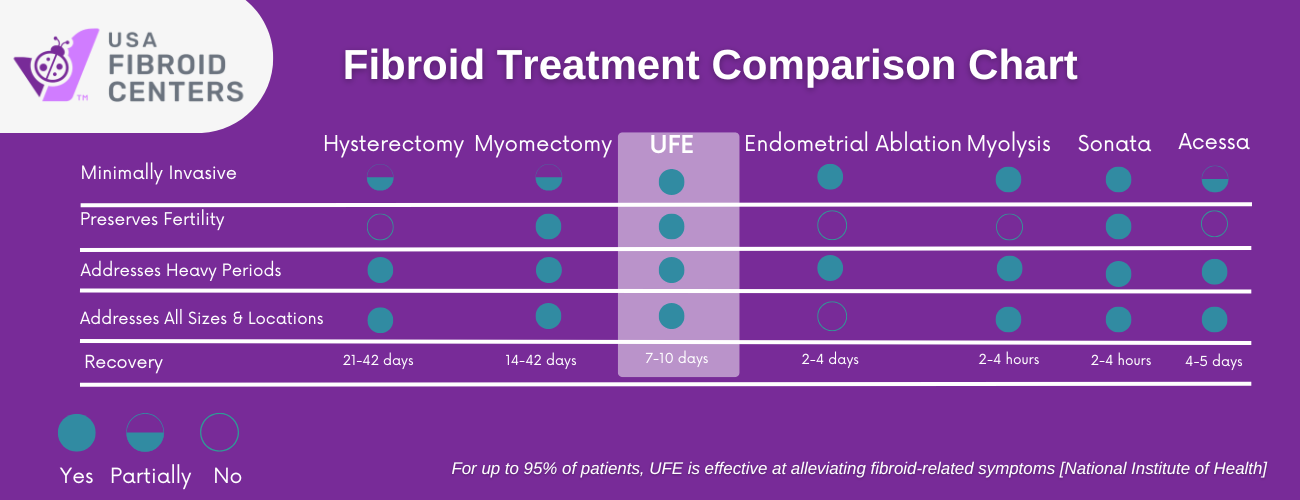
When it comes to treating fibroids, your options range from medication to surgery and minimally invasive procedures. It is important to consult a fibroid specialist to decide what treatment may be best for you. When exploring your treatment options, they will help you find out things like:
- Risks and potential side effects
- Success and recurrence rates
- Duration of the procedure and anesthesia required
- Recovery time and hospital stay expectations
- Impact on future fertility and pregnancy goals
- How the treatment affects specific symptoms (like heavy bleeding vs. pelvic pressure)
- Incision type (open, laparoscopic, or incisionless)
- Insurance coverage and out-of-pocket costs
8. Will Fibroids Come Back After Treatment?
Unless you choose a hysterectomy (which completely removes the uterus), there is always a chance that new fibroids can develop or that existing small “seedlings” missed during a procedure will grow.
Your personal risk of recurrence depends on a few key factors:
- The type of treatment: Non-surgical options (like UFE or medication) and myomectomies leave the uterus intact, meaning new fibroids can form over time. Hysterectomy is the only 100% definitive cure.
- Your age: If you are further away from menopause, your body will continue producing estrogen and progesterone—the hormones that fuel fibroid growth—giving new fibroids more time to develop.
- Genetics and fibroid type: Uterine fibroids can have a genetic component, so if you have a family history of severe fibroids or currently have multiple clusters, your natural risk for recurrence is higher.
Because recurrence is highly individualized, it is important to ask your specialist about the long-term success rates for your specific situation and to establish a post-treatment monitoring plan to catch any new growth early.
9. What Happens If I Wait to Treat Fibroids?
Because fibroids are unpredictable, waiting to see what happens without a formal evaluation can be a risky strategy. Without knowing the exact size, location, and growth rate of your fibroids, delaying care can allow manageable issues to become much more severe.
Over time, leaving fibroids unmonitored can lead to critical changes, including:
- Worsening daily symptoms: What starts as mild cramping or bloating can progressively turn into debilitating pelvic pain, severe abdominal pressure, and frequent urination as fibroids grow and press on your bladder or bowels.
- Chronic health issues: Prolonged, heavy menstrual bleeding can gradually drain your iron stores, leading to severe anemia and chronic fatigue that impacts your daily life.
- Fewer treatment options later: Smaller fibroids are often excellent candidates for fast-recovery, minimally invasive procedures. If you wait and the fibroids grow too large or numerous, major surgery (like an open myomectomy or a hysterectomy) may become your only remaining option.
- Complications for future fertility: Depending on where they are positioned, growing fibroids can begin to distort the uterine cavity, potentially impacting your ability to achieve or maintain a pregnancy.
You cannot safely choose a “watchful waiting” approach until a specialist has mapped out your specific fibroids. The most critical first step is to schedule an appointment with a fibroid expert who can properly diagnose your condition and help you intervene before your options become limited.
10. What Should I Do Before My Next Appointment?
To maximize your time with your doctor and ensure you get a personalized care plan, take these three simple steps before your visit:
- Log Your Symptoms: Track your bleeding patterns, pain levels, and pressure symptoms (like bloating or frequent urination) for at least one cycle to give your doctor concrete data.
- Gather Your Records: Request copies of past pelvic ultrasounds, MRIs, or lab reports so your doctor can review the exact size and location of your fibroids immediately.
- Define Your Goals: Write down your priorities—whether that is managing heavy bleeding, preserving fertility, or discussing treatment options—along with a list of your top questions.
Get Clear Answers About Your Fibroids
Why It Helps to Prepare Questions Before a Fibroid Consultation
Walking into a medical appointment can feel overwhelming, and it is incredibly common to forget your most pressing concerns the moment your doctor sits down. Preparing a dedicated list of questions to ask your doctor before you arrive ensures you remain in charge of your own healthcare. A consultation moves quickly, and having written prompts prevents important topics like future fertility or non-surgical treatment options from being overlooked.
Taking the time to outline specific questions to ask a doctor also transforms your appointment from a one-way explanation into a collaborative discussion. It helps you maximize your limited time with a specialist, ensures you leave the appointment with clear answers, and a thoroughly understood care plan.
Get Answers with USA Fibroid Centers Today
Navigating a uterine fibroid diagnosis can feel overwhelming, but you don’t have to figure it out alone. Coming to your appointments armed with specific questions about the type, size, and growth rate of your uterine fibroids directly transforms the conversation. When you understand exactly how these factors influence your symptoms and treatment options, especially if preserving your fertility is a priority, you and your doctor can collaborate on a much more productive, personalized care plan.
The most important step you can take today is advocating for your own health and comfort. You don’t have to live with disruptive bleeding, constant pelvic pressure, or the anxiety of the unknown. When you are ready to get expert answers tailored to your unique situation, the specialized team at USA Fibroid Centers is here to help.
Schedule a consultation online or call us at 855-616.2555 to explore your options, map out your recovery, and confidently take the next step toward reclaiming your quality of life.
SCHEDULE A FIBROID CONSULTATION ONLINE