

Medically reviewed by
USA Fibroid Centers Medical Review Team
Experienced interventional radiology specialists Reviewed: September 2026
A uterine fibroid diagnosis usually starts with a pelvic exam, followed by an ultrasound. This confirms the fibroids and maps their size and location. Some patients also need an MRI for a more detailed picture before treatment decisions are made. If you have heavy periods, pelvic pressure, or unexplained anemia, an accurate diagnosis is the first real step toward relief. It is not just another appointment to check off. Here is what happens at each stage of a fibroid diagnosis, why the specialist you see can shape your options, and what your results mean for treatment planning.
Why Getting an Accurate Fibroid Diagnosis Matters
Fibroid symptoms overlap with other conditions. Heavy bleeding, for example, can come from fibroids, adenomyosis, or a hormonal imbalance. Each of these may need a different approach. An accurate diagnosis tells you and your care team exactly what you are dealing with. Left unconfirmed, heavy bleeding can also lead to anemia caused by heavy bleeding over time. A clear diagnosis helps you move forward with confidence instead of guessing at the cause of your symptoms.
How Doctors Diagnose Uterine Fibroids
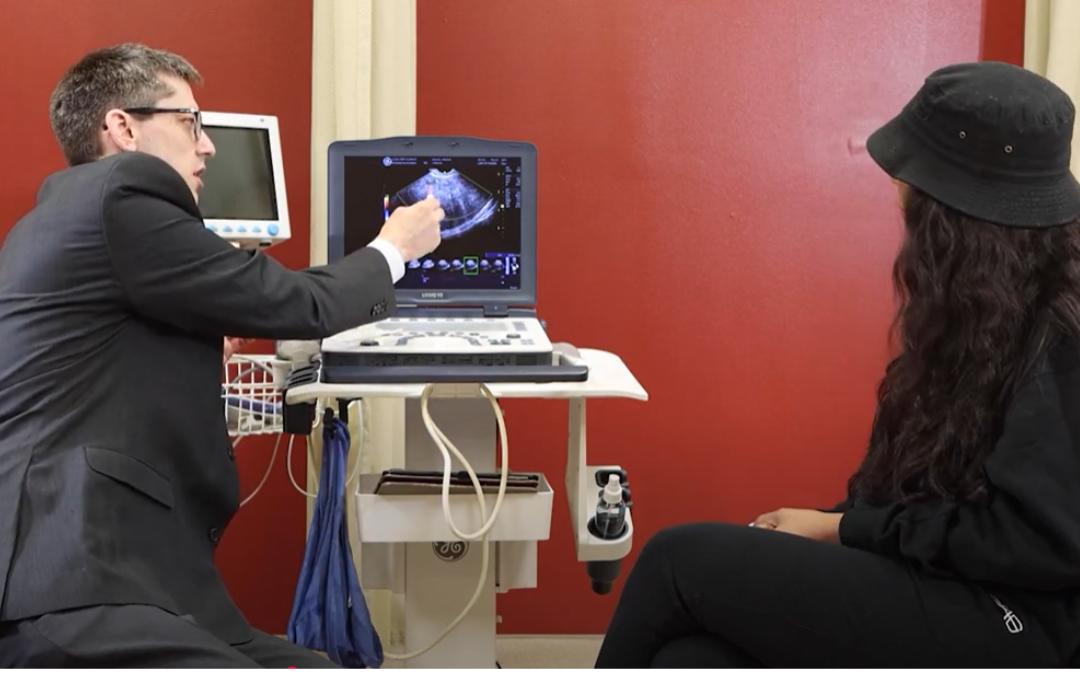
Diagnosing fibroids usually starts with a pelvic exam. Imaging comes next if fibroids are suspected. Most patients follow a similar path, though the exact tests can vary based on your common fibroid symptoms.
Pelvic Exam
A pelvic exam is often the first place fibroids are noticed. Your provider checks the size and shape of your uterus. Fibroids can make the uterus feel larger or irregular. A pelvic exam alone cannot confirm fibroids. It usually leads to the next step, which is imaging.
Ultrasound
Ultrasound is typically the first imaging test used to confirm fibroids. There are two main types. Transabdominal ultrasound uses a handheld device moved across the abdomen and works well for larger fibroids. Transvaginal ultrasound uses a slender probe placed in the vagina and gives a closer view, which helps detect smaller fibroids or ones near the uterine lining.
Transabdominal ultrasound: This method involves applying a water-based gel to the abdomen and using a handheld device (a transducer) to emit high-frequency sound waves. The sound waves bounce off internal structures, creating images on a monitor. Transabdominal ultrasound is best for assessing larger fibroids and providing information about their size, shape, and location within the uterus.
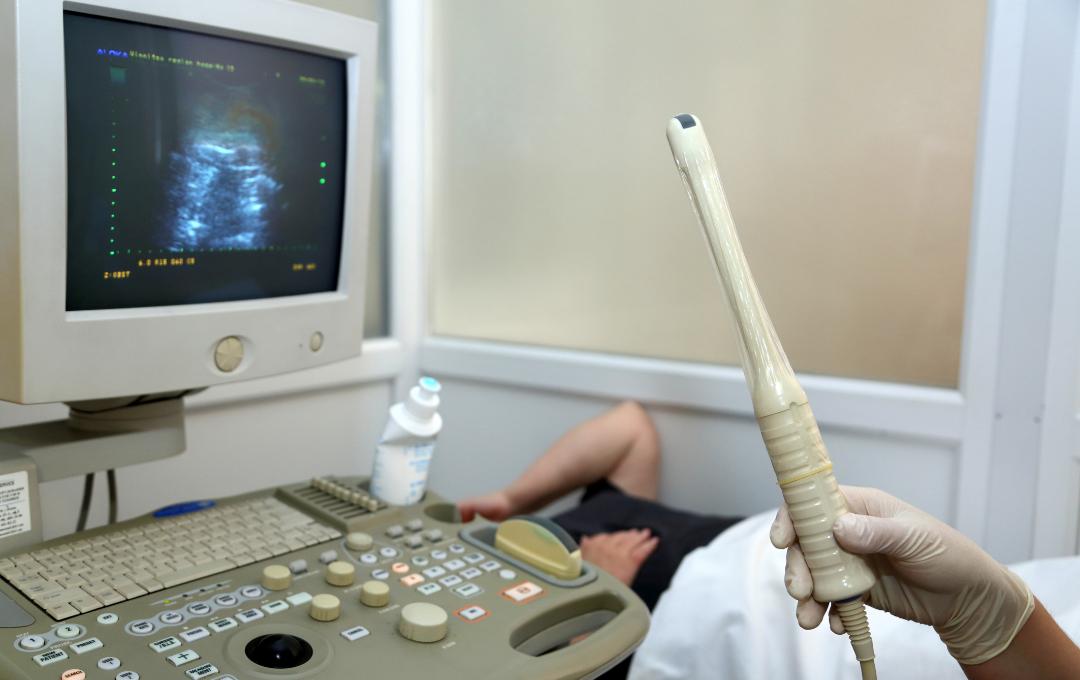
Either method uses sound waves to create images of the uterus. This lets your provider see the number, size, and rough location of any fibroids. Ultrasound is non-invasive, does not use radiation, and can often be done the same day you discuss your symptoms.
When using ultrasounds for fibroid diagnosis, the advantages include:
- It’s non-invasive: Ultrasounds are comfortable and safe as they do not require incisions or injections.
- Uses real-time imaging: Providing immediate images enables clinicians to promptly assess fibroids and any abnormalities.
- No radiation exposure: Since ultrasound does not expose patients to ionizing radiation, it is safer for pregnant women or those requiring multiple imaging sessions.
- It’s cost-effective: It is relatively inexpensive, making it more accessible for routine screening and follow-up exams.
Additionally, ultrasound is readily available, making them a convenient option for diagnosing fibroids.
MRI and Fibroid Mapping
Sometimes more detail is needed, especially before considering treatment. An MRI may be ordered in these cases.
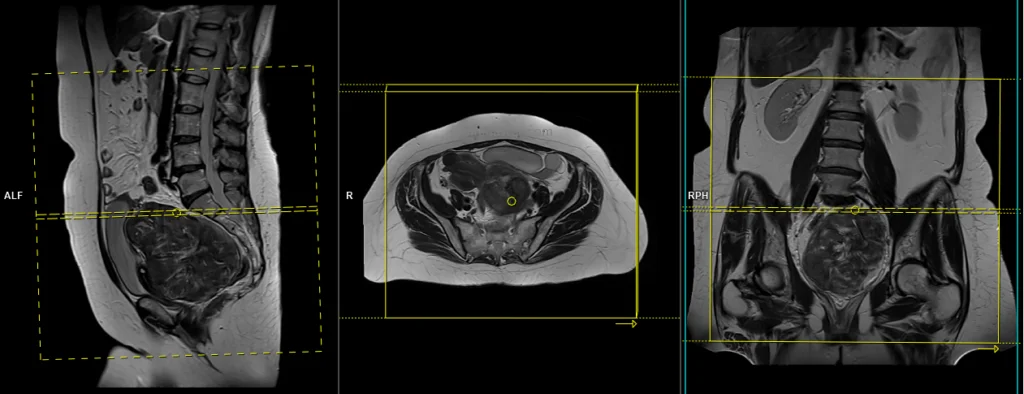
Magnetic Resonance Imaging (MRI) and hysterosonography are used for more detailed imaging. An MRI uses radio waves and a magnetic field to create 3D images of the uterus.
A hysterosonography provides images of the uterine cavity by introducing saline. Hysteroscopy, a more invasive procedure, involves the insertion of a camera directly into the uterus. These methods are more complex and invasive, so it’s important to consult with a fibroid specialist to determine the most suitable diagnostic approach for your situation.
MRI shows fibroid size, number, and location more clearly than ultrasound. This detail can help determine whether a fibroid is a good candidate for Uterine Fibroid Embolization (UFE). Not every patient needs an MRI. It becomes more useful once treatment planning begins.
Blood Tests for Anemia
If you have heavy periods, your provider may order a blood test. This checks for anemia caused by heavy menstrual bleeding. A blood test alone cannot diagnose fibroids. But it can point toward heavy bleeding as a symptom worth investigating further. It also helps your care team see the full picture of how fibroids may be affecting you.
Does an Interventional Radiologist Diagnose Fibroids Differently Than an OBGYN?
An interventional radiologist and an OBGYN often play different roles. Neither one replaces the other. An OBGYN usually performs your first pelvic exam. They discuss your medical history and order your first ultrasound. An interventional radiologist typically gets involved once imaging is being reviewed for treatment planning. This is especially true with MRI. Evaluating fibroids for a procedure like UFE requires a close look at blood supply and vascular anatomy, which is a core part of interventional radiology training. In many cases, both specialists play a role. The OBGYN identifies and confirms the fibroids. The interventional radiologist reviews the same imaging to see whether you may be a candidate for UFE. Many patients see both specialists at different points in their diagnosis and treatment planning.
Diagnosis and Prognosis of Fibroids
If you receive a uterine fibroids diagnosis, you may be concerned about your prognosis. Although fibroids are generally not dangerous, they can potentially harm surrounding organs, impact fertility, and cause pain or discomfort.
Fibroid treatment is effective and widely available regardless of the type, size, or number of fibroids. Treatment options include fibroid surgery, such as a hysterectomy or myomectomy, and non-surgical methods like uterine fibroid embolization (UFE).
UFE is a minimally invasive procedure that effectively eliminates fibroid symptoms and quickly returns you to normal daily activities. At USA Fibroid Centers, we offer uterine fibroid embolization so that you can go back to a life free from pain and discomfort due to fibroid symptoms.
Once fibroids are confirmed, the next step is talking through your options. This includes your symptoms, the size and location of your fibroids, and your personal goals. Not every fibroid needs immediate treatment. Small fibroids without symptoms may simply be monitored over time. If your fibroids are causing heavy bleeding, pelvic pressure, or other symptoms, options can range from surgery to minimally invasive procedures like Uterine Fibroid Embolization. Understanding whether you may be a candidate for UFE usually means reviewing your imaging with an interventional radiologist and talking through your goals compared to other paths, such as a hysterectomy.
Next step: confirm your diagnosis
Get Clarity on Your Fibroid Diagnosis
A confirmed fibroid diagnosis is the foundation for deciding what comes next, whether that means monitoring, treatment, or a conversation about minimally invasive options like UFE. If you are experiencing symptoms and want a clear answer, a fibroid specialist can guide you through the diagnostic process and explain what your results mean for your options.
FAQs About Uterine Fibroid Diagnosis
- Office on Women’s Health, U.S. Department of Health and Human Services, “Uterine Fibroids,” womenshealth.gov/a-z-topics/uterine-fibroids
- Eunice Kennedy Shriver National Institute of Child Health and Human Development (NICHD), “How are uterine fibroids diagnosed?,” nichd.nih.gov/health/topics/uterine/conditioninfo/how-diagnosed
- Society of Interventional Radiology, “Uterine Fibroid Embolization,” sirweb.org/patients/uterine-fibroids/
Medical Disclaimer: This article provides educational information about uterine fibroids and treatment options. It is not a diagnosis or medical advice. Only a qualified fibroid specialist can determine whether you have fibroids or recommend appropriate treatment. If you have heavy periods, pelvic pain, or other symptoms, consult a healthcare provider or contact USA Fibroid Centers for an evaluation.