


When symptoms like heavy menstrual bleeding, pelvic pain, or fertility concerns point to possible uterine fibroids, accurate imaging matters. One diagnostic test your provider may recommend is saline sonography, also known as saline infusion sonohysterography (SIS). This minimally invasive ultrasound technique provides a clearer view of the uterine cavity and is especially helpful for identifying fibroids that affect the inside of the uterus.
What Is Saline Sonography?
Saline sonography is a specialized pelvic ultrasound that uses sterile saline to gently expand the uterine cavity during imaging. By filling the uterus with fluid, the test creates contrast that allows fibroids, polyps, and other abnormalities to appear more clearly on ultrasound.
Unlike a standard transvaginal ultrasound, which may miss smaller or cavity-distorting fibroids, saline sonography highlights subtle structural changes – making it a valuable diagnostic step.
Why Is Saline Sonography Used for Fibroids?
Fibroids can grow in different locations within the uterus, and their position often determines symptoms and treatment options. Saline sonography is particularly effective for detecting:
-
Submucosal fibroids (fibroids that grow into the uterine cavity)
-
Fibroids that distort the uterine lining
-
The size, number, and exact location of fibroids affecting the cavity
This level of detail helps providers:
-
Explain the cause of symptoms like heavy or prolonged periods
-
Assess fertility-related concerns
-
Decide whether additional imaging or treatment is needed
Locations for Fibroid Diagnosis
What Happens During the Procedure?
Saline sonography is typically performed in an outpatient setting and takes about 15–30 minutes.
Here’s what to expect:
-
You’ll lie on an exam table, similar to a pelvic exam.
-
A thin catheter is gently placed through the cervix.
-
Sterile saline is slowly infused to expand the uterus.
-
A transvaginal ultrasound probe captures detailed images while the saline is in place.
Most patients describe the sensation as mild pressure or cramping that subsides quickly.
Does Saline Sonography Hurt?
Discomfort is usually minimal and temporary. Some people experience light cramping similar to menstrual cramps during the saline infusion. Over-the-counter pain relievers are often sufficient if needed, and most patients return to normal activities the same day.
How Is Saline Sonography Different From a Regular Ultrasound?
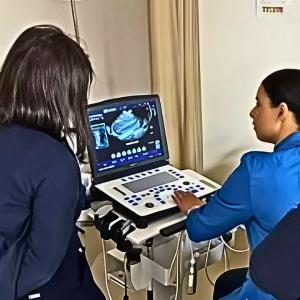
| Standard Transvaginal Ultrasound | Saline Sonography |
|---|---|
| Views uterus without fluid | Uses saline for enhanced clarity |
| May miss small cavity issues | Clearly shows fibroids inside the uterus |
| General structural overview | Detailed evaluation of uterine lining |
Because of this added precision, saline sonography is often used when symptoms persist but standard imaging is inconclusive. Preparing for your first consultation can help you determine which questions to ask about diagnostics.
Saline Sonography for Fibroids
Saline sonography is a powerful diagnostic tool for evaluating fibroids—especially those that affect the uterine cavity. By providing clearer, more detailed imaging than a standard ultrasound, it helps patients and providers better understand symptoms and make informed decisions about next steps.
If you’re experiencing fibroid-related symptoms or have been told you need further uterine imaging, saline sonography may be an important part of your care pathway. Discuss your best path forward with one of our expert fibroid doctors.