

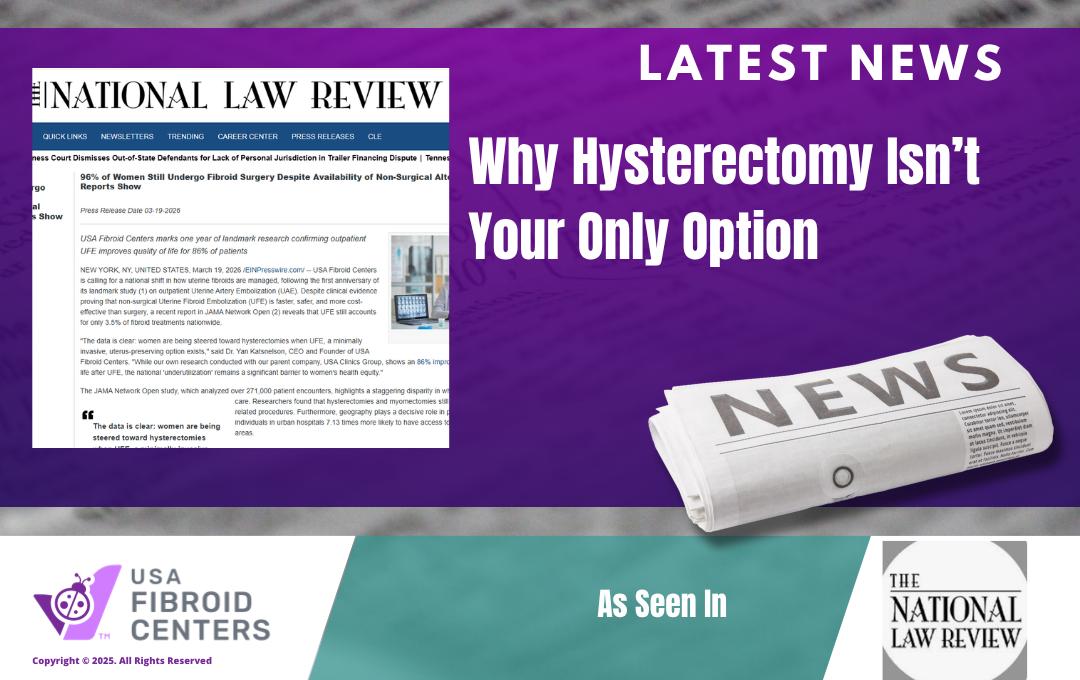
In the landscape of American women’s health, a quiet but profound disparity persists. Despite decades of medical advancement, the vast majority of women suffering from uterine fibroids are still directed toward major surgery—specifically hysterectomies—even when a non-surgical, uterus-preserving alternative has been proven effective.
Dr. Yan Katsnelson, Founder and CEO of USA Fibroid Centers is on a mission to change that narrative. Marking the one-year anniversary of his organization’s landmark research, Katsnelson is calling for a national shift in how the medical community treats one of the most common health issues facing women today.
The Data Gap: Why 96% Are Still Choosing Surgery
The push for change is backed by sobering statistics. A recent report in JAMA Network Open, which analyzed over 271,000 patient encounters, revealed that hysterectomies and myomectomies still represent a staggering 96% of fibroid-related procedures. Uterine Fibroid Embolization (UFE)—a minimally invasive treatment—accounts for only 3.5% of cases nationwide.
For Dr. Katsnelson, these numbers do not reflect patient preference, but rather a lack of access and information.
“The data is clear: women are being steered toward hysterectomies when UFE, a minimally invasive, uterus-preserving option exists,” Katsnelson asserts. “While our own research shows an 86% improvement in patient quality of life after UFE, the national ‘underutilization’ remains a significant barrier to health equity.”
Closing the Care Gap
Beyond just medical efficacy, Katsnelson’s work highlights a critical social issue: geography and insurance status often dictate the quality of care a woman receives. Current data shows that patients in urban hospitals are seven times more likely to have access to UFE than those in rural areas.
USA Fibroid Centers has intentionally focused on the outpatient setting to bridge this divide. Their internal study of over 1,200 patients found that 40% of those successfully treated with UFE were Medicaid recipients. By moving treatment out of traditional hospital settings and into specialized community centers, Katsnelson is proving that specialized care can be both accessible and equitable.
A New Standard of Recovery
The clinical appeal of UFE is hard to ignore. Unlike a hysterectomy, it requires no general anesthesia and offers a significantly faster recovery time. It allows women to return to their daily lives within days rather than weeks, all while preserving the uterus.
As USA Fibroid Centers prepares for National Fibroid Awareness Month this July, the focus remains on education. Through nationwide screenings and public advocacy, Dr. Katsnelson is working to ensure that the next generation of patients do not have to choose between their health and their physical integrity.
“We are dedicated to closing the care gap,” says Katsnelson. “Every woman deserves to know that major surgery isn’t her only option.”
To read more about the clinical data and the mission to expand UFE access, you can view the original announcement in the National Law Review.