


Medically reviewed by
USA Fibroid Centers Medical Review Team
Experienced interventional radiology specialists
Reviewed: August 2026
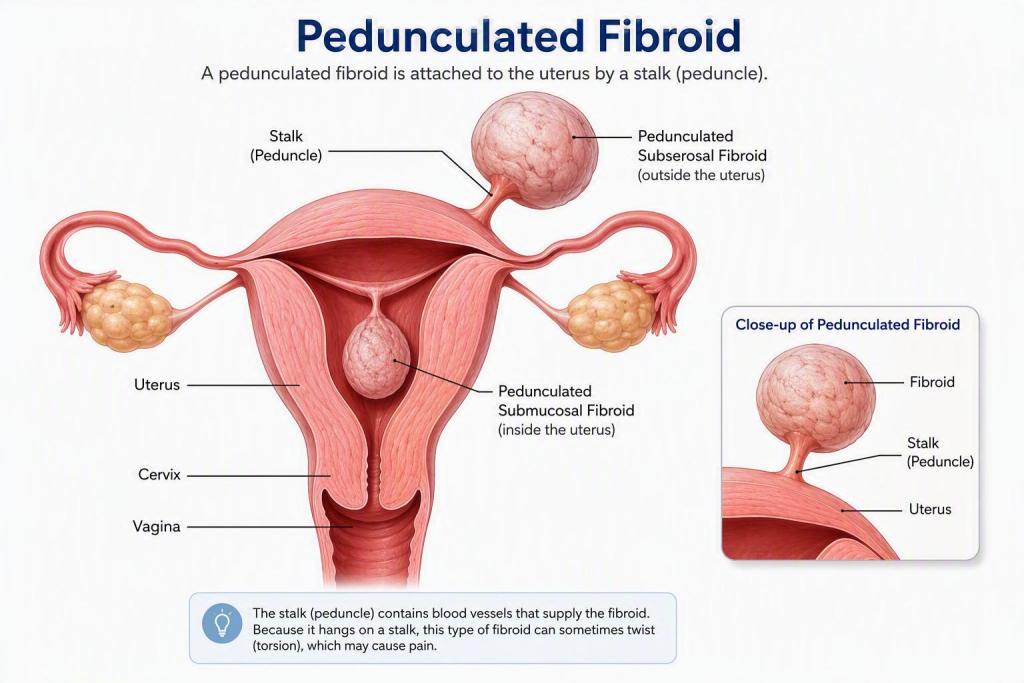
A pedunculated fibroid is a uterine fibroid that grows on a thin stalk, called a peduncle, attached to the uterus. That stalk is the defining feature that sets pedunculated fibroids apart from the other main fibroid types, which typically grow embedded within the uterine wall or just beneath its surface without a separate stem connecting them.
Pedunculated fibroids can grow on the outer wall of the uterus, projecting outward into the pelvis, or on the inner wall, projecting into the uterine cavity. Where they grow influences the kinds of symptoms they may cause. For many women, a pedunculated fibroid causes no symptoms at all. For others, it creates ongoing discomfort, and in rare cases, the stalk can cause a specific complication called torsion that requires prompt medical attention.
If you have recently been diagnosed with a pedunculated fibroid, or are trying to understand what that diagnosis means, the information below covers what these fibroids are, how they differ from other types, and what your options may be.
Understanding the Different Types of Pedunculated Fibroids
Fibroid Terms at a Glance
Pedunculated fibroid: A fibroid attached to the uterus by a thin stalk.
Peduncle: The stalk or stem-like structure that connects the fibroid to the uterus.
Sessile fibroid: A fibroid attached directly to the uterine wall without a stalk.
Subserosal: Located on the outside of the uterus.
Submucosal: Located on the inside of the uterus, near the uterine lining.
Torsion: Twisting of a fibroid’s stalk, which can cause sudden pain.
Pedunculated fibroids are classified based on where they grow in relation to the uterus. Some develop on the outside of the uterus and extend into the pelvis, while others grow inward toward the uterine cavity. Their location often influences the symptoms they cause and whether they affect nearby organs, menstrual bleeding, or fertility.
You can learn more about the full range of uterine fibroid types to better understand how pedunculated fibroids compare to intramural, subserosal, and submucosal fibroids that do not have a stalk.
Pedunculated Subserosal Fibroids
These grow on the outer surface of the uterus and project outward toward the pelvis. Because of their external position, they tend to press on nearby structures including the bladder, bowel, or back muscles – rather than directly affecting menstrual flow.
Symptoms may include:
- Pelvic pressure or heaviness
- Frequent urination
- Lower back pain
- A dull, aching sensation in the abdomen
Pedunculated Submucosal Fibroids
These grow on the inner surface of the uterus and project into the uterine cavity. Because they develop close to the uterine lining, they are more likely to affect menstrual bleeding and reproductive health.
Symptoms may include:
- Heavy or prolonged menstrual bleeding
- Menstrual cramping
- Pelvic pain
- Anemia related to heavy bleeding
- Fertility and pregnancy-related complications
A large pedunculated submucosal fibroid may also distort the shape of the uterine cavity and interfere with implantation. For more detail on this fibroid type specifically, see our pedunculated fibroid overview.
Do Pedunculated Fibroids Hurt?
Pedunculated fibroids do not always hurt. Many women with pedunculated fibroids experience no pain at all. Whether a pedunculated fibroid causes pain depends on its location, size, and whether it affects nearby structures.
Subserosal pedunculated fibroids on the outer wall are more likely to cause a dull, persistent pelvic ache, pressure against the bladder or bowel, or back and leg discomfort if they press on nerves. Submucosal pedunculated fibroids on the inner wall are more likely to cause painful or heavy menstrual cycles and cramping.
Symptom intensity does not always track with fibroid size. Some large pedunculated fibroids cause minimal discomfort, while smaller ones in sensitive locations may produce significant symptoms. For a fuller picture of the range of fibroid symptoms – from pelvic pain to heavy bleeding to fatigue from anemia – the fibroid symptoms page offers more detail.
Wondering if a fibroid specialist is available near you? Find the location closest to you.
Are Pedunculated Fibroids Dangerous?
Pedunculated fibroids are not generally considered more dangerous than other fibroid types. Like other uterine fibroids, they are typically benign. Leiomyosarcoma is a rare uterine cancer that can sometimes resemble a fibroid, but it is considered a distinct condition rather than a fibroid that has turned cancerous.[2]
That said, the stalk does create one specific risk that other fibroid types do not share: torsion.
What Is Fibroid Torsion?
Torsion occurs when the stalk of a pedunculated fibroid twists, disrupting the blood supply to the fibroid. This can cause sudden, severe pelvic pain that may come on quickly and feel quite different from typical fibroid cramping. Torsion is rare, but it does require prompt medical evaluation. If you experience sudden, intense pelvic pain and know you have a pedunculated fibroid, seek care rather than waiting to see if the pain resolves on its own.
Torsion does not increase cancer risk and does not mean the fibroid has changed in nature. It is a mechanical complication related to the stalk’s movement.
Do Pedunculated Fibroids Need to Be Removed?
Not necessarily. The decision to treat a fibroid – pedunculated or otherwise – depends primarily on whether it is causing symptoms that affect your quality of life, not on its type or shape. A pedunculated fibroid that is not causing symptoms may be monitored, depending on its size, location, growth, and your specialist’s recommendations.
If a pedunculated fibroid is causing heavy bleeding, pain, pressure, or other symptoms, treatment may be appropriate. Uterine Fibroid Embolization (UFE) is a non-surgical, outpatient procedure that can treat pedunculated fibroids by blocking the blood supply they need to maintain their size. During UFE, an interventional radiologist guides a thin catheter to the uterine arteries and delivers small particles that restrict blood flow to the fibroid. Over time, the fibroid shrinks and symptoms may improve. UFE treats multiple fibroids at once and preserves the uterus.
A fibroid specialist can evaluate your fibroid’s size, location, and stalk characteristics along with your symptom picture to help you understand which approach – monitoring or treatment – may be appropriate for your situation.
What to Do If You Have a Pedunculated Fibroid
If you have been diagnosed with a pedunculated fibroid, the first step is understanding what it means for your specific situation. Diagnosis typically involves a pelvic exam followed by imaging such as an ultrasound or MRI, which can confirm the fibroid’s location, size, and stalk characteristics. This imaging is important for distinguishing a pedunculated fibroid from other uterine growths and for planning any potential treatment.
Your symptoms, fertility goals, and overall health all factor into the conversation about next steps. Fibroid size is one consideration, though size alone does not determine whether treatment is needed – read more about fibroid size and what it means. A fibroid specialist can walk you through monitoring options if you are asymptomatic, or non-surgical treatment options if symptoms are affecting your daily life.
Treatment option: UFE
Your Symptoms Deserve a Closer Look
A pedunculated fibroid may be causing symptoms you have been managing quietly – pelvic pressure, heavy periods, or discomfort you have learned to work around. Knowing what you have is a strong first step.
Uterine Fibroid Embolization is a minimally invasive, outpatient procedure that can help address pedunculated fibroids and their symptoms without surgery. A fibroid specialist can review your imaging and help you understand whether UFE may be right for your situation.
FAQs About Pedunculated Fibroids
- National Institute of Environmental Health Sciences. “Uterine Fibroids.” niehs.nih.gov/health/topics/conditions/uterine-fibroids
- Mburu S, et al. (2024). “Uterine Leiomyomata.” StatPearls, National Library of Medicine. ncbi.nlm.nih.gov/books/NBK546680/
- Stewart EA, et al. (2017). “Epidemiology of uterine fibroids: a systematic review.” BJOG, 124(10):1501-1512. pubmed.ncbi.nlm.nih.gov/28296146/
- InformedHealth.org. “Overview: Uterine fibroids.” National Library of Medicine. ncbi.nlm.nih.gov/books/NBK279535/
Medical Disclaimer: This article provides educational information about uterine fibroids and treatment options. It is not a diagnosis or medical advice. Only a qualified fibroid specialist can determine whether you have fibroids or recommend appropriate treatment. If you have heavy periods, pelvic pain, or other symptoms, consult a healthcare provider or contact USA Fibroid Centers for an evaluation.