

Medically reviewed by
Dr. Jacob White, M.D.
Interventional Radiologist, Fibroid Specialist, Medical Director. Reviewed: September 2026
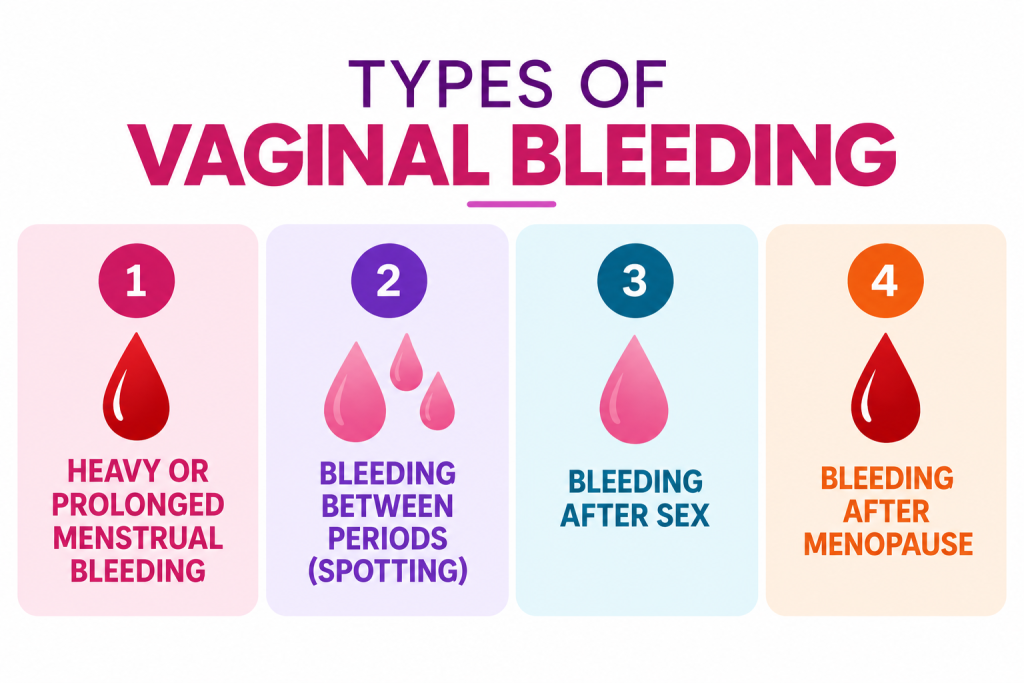
Vaginal bleeding is not all the same, and the differences between types matter more than most patients realize. Menstrual bleeding, spotting between periods, bleeding after sex, and postmenopausal bleeding each follow distinct patterns, arise from different causes, and carry different clinical significance. Understanding which type you are experiencing is the first step toward knowing whether it warrants evaluation.
Tracking these differences is particularly important for women with fibroid symptoms, because fibroids can disrupt the menstrual cycle in multiple ways at once. Some women experience heavy or prolonged periods. Others notice spotting between cycles. Some have bleeding that appears during wiping but does not soak through a pad. This article classifies the main types of vaginal bleeding, explains what each looks like, and describes when fibroids may be contributing.
What Is Vaginal Bleeding, and When Is It Considered Abnormal?
Vaginal bleeding encompasses all blood that exits through the vaginal canal. In women of reproductive age, most vaginal bleeding is menstrual, occurring as the uterus sheds its lining during a regular cycle. Clinically, a normal menstrual period lasts 3 to 7 days, produces 30 to 80 milliliters of blood loss, and recurs every 21 to 35 days.[1]
Any bleeding that falls outside these parameters, or that occurs in a context where menstruation is not expected, such as after menopause or between periods, is classified as abnormal. The International Federation of Gynecology and Obstetrics (FIGO) recommends describing abnormal uterine bleeding in terms of regularity, frequency, duration, and volume rather than using older clinical labels that lack standard definitions.[2]
Normal Menstrual Bleeding vs. Abnormal Uterine Bleeding
Normal menstrual bleeding is predictable, manageable without disrupting daily life, and resolves within a week. Abnormal uterine bleeding (AUB) describes bleeding that deviates from those norms, whether through heavier flow, longer duration, irregular timing, or bleeding at unexpected points in the cycle.
The distinction matters because it shapes which evaluation steps are appropriate. Some types of abnormal bleeding resolve on their own. Others are associated with underlying conditions, including uterine fibroids, that benefit from diagnosis and treatment. If your bleeding has changed from what is typical for your body, that change is worth noting and discussing with a specialist.
The Main Types of Vaginal Bleeding
Menstrual Bleeding (Heavy or Prolonged)
Heavy menstrual bleeding, formerly called menorrhagia, refers to menstrual flow that is heavier than normal or lasts longer than 7 days. Soaking through a pad or tampon every hour for several consecutive hours, or passing large clots regularly, are practical indicators of heavy flow.[3]
Prolonged bleeding extending beyond 10 days per cycle, or periods that have become progressively heavier over time, are among the most common indicators of fibroid involvement. Submucosal fibroids, which grow just beneath the uterine lining, are particularly associated with heavy and prolonged menstrual bleeding because of how they disrupt the lining’s shedding pattern.
Intermenstrual Bleeding (Spotting Between Periods)
Intermenstrual bleeding refers to vaginal bleeding that occurs at any point during the menstrual cycle other than during the expected period. It ranges from very light spotting visible only on toilet paper to heavier episodes that require a pad or tampon.
Light spotting around ovulation is common and usually harmless. However, spotting between periods that recurs across multiple cycles, especially when accompanied by pelvic pressure, pain, or heavy flow during periods, may indicate an underlying condition. Fibroids that press against or grow into the uterine lining can cause irregular shedding at unexpected points in the cycle.
Postcoital Bleeding (Bleeding After Sex)
Postcoital bleeding is non-menstrual bleeding that occurs immediately after sexual intercourse. It is distinct from menstrual and intermenstrual bleeding because of its specific timing. Causes range from cervical sensitivity and vaginal dryness to cervical polyps, infection, and uterine conditions.
Fibroids can contribute to bleeding after sex when they press against the uterus, cervix, or vaginal canal, making surrounding tissues more sensitive and prone to irritation during intercourse. Recurring postcoital bleeding should be evaluated to identify the underlying cause.
Postmenopausal Bleeding (Bleeding After Menopause)

Postmenopausal bleeding is defined as any vaginal bleeding that occurs 12 or more months after a woman’s final menstrual period. Because the uterine lining is no longer expected to shed after menopause, any bleeding in this context is considered abnormal and warrants prompt evaluation.[4]
Common causes include uterine fibroids, endometrial atrophy, endometrial polyps, and, in a smaller percentage of cases, endometrial cancer. Bleeding after menopause should not be assumed to be harmless. A specialist evaluation, typically including a pelvic ultrasound, can identify the cause and guide appropriate next steps.
What Does Cervical Bleeding Look Like?
Cervical bleeding originates from the cervix, the narrow lower portion of the uterus that opens into the vagina. It differs from uterine bleeding in its source, though both may present as vaginal bleeding and can be difficult to distinguish without a clinical exam.
Cervical bleeding tends to be lighter than heavy menstrual flow. It often appears as spotting or light pink discharge rather than a full flow. It is most likely to occur after sex, after a pelvic exam or Pap smear, or in women with cervical irritation, polyps, or infection. The blood is often brighter red because it exits the body quickly without pooling or oxidizing first.
If cervical bleeding is related to a cervical polyp or cervicitis, it typically resolves with treatment of the underlying cause. Bleeding that is heavier, recurrent, or accompanied by unusual discharge or pelvic pain should be evaluated regardless of suspected source.
Blood on Toilet Paper but Not on a Pad: Understanding the Difference
Bleeding that appears on toilet paper during wiping but does not soak through to a pad or liner is a common and often confusing experience. Several explanations may apply depending on where the bleeding is coming from and how light the flow is.
Very light vaginal or cervical bleeding may produce only a small amount of blood per hour, enough to be visible on toilet paper but not enough to reach a pad. This is consistent with cervical irritation, light intermenstrual spotting, or the very beginning or end of a menstrual period.
In some cases, what appears to be vaginal bleeding during wiping may originate from another nearby structure. The urinary tract and rectum are anatomically close to the vagina, and blood from a urinary tract issue or minor rectal bleeding can appear in the same area. Inserting a tampon or pad to confirm the vagina as the source can help clarify where the blood is coming from.
If wiping-only bleeding persists across multiple days or cycles, or is accompanied by other symptoms such as pelvic pressure or urinary discomfort, a clinical evaluation can help identify the source and whether any underlying condition is involved.
When Fibroids May Be the Cause
Uterine fibroids are noncancerous growths that develop in or around the uterine wall. They are common among women of reproductive age, with estimates suggesting up to 70-80% of women develop at least one fibroid by age 50.[5] Many women with fibroids experience no symptoms. Others experience significant changes in their bleeding patterns that can affect multiple categories of vaginal bleeding simultaneously.
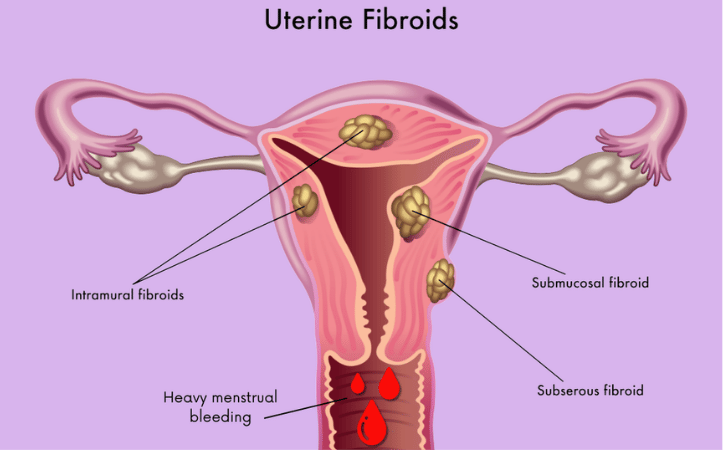
Fibroid-related bleeding may present as:
- Heavy or prolonged menstrual periods that soak through pads or tampons, last more than 7-10 days, or include large clots
- Intermenstrual spotting between expected periods, particularly when submucosal fibroids press against the uterine lining
- Postcoital bleeding from fibroids that press on or near the cervix or vaginal canal
The location of a fibroid within the uterus strongly influences which type of bleeding pattern develops. Submucosal fibroids, which grow closest to the uterine cavity lining, are most associated with heavy bleeding and intermenstrual spotting. Intramural fibroids, which grow within the uterine muscle wall, can also disrupt normal flow. Subserosal fibroids, growing on the outer surface of the uterus, are less likely to cause bleeding changes but may cause pelvic pressure.
If your bleeding pattern has changed, if periods have become heavier or longer, or if you are experiencing spotting or bleeding at unexpected times, evaluating whether fibroids are a factor is a reasonable clinical step. A transvaginal ultrasound can identify fibroids, confirm their location, and guide discussion of options.
UFE preserves your uterus while treating fibroid symptoms, with recovery in 1-2 weeks. If you are interested in learning whether Uterine Fibroid Embolization (UFE) may be right for you, our fibroid specialists can review your case.
Find a fibroid specialist near you to discuss your bleeding pattern and whether an evaluation may be appropriate.
Treatment option: UFE
Understanding Your Bleeding Pattern Is the First Step – Treatment Can Address the Cause
Learning which type of bleeding you are experiencing narrows the range of possible causes, but it does not replace a clinical evaluation. Bleeding patterns that are new, heavier, longer, or irregular across multiple cycles deserve more than watchful waiting.
Uterine Fibroid Embolization (UFE) is a minimally invasive, image-guided, outpatient treatment that may reduce fibroid-related bleeding by cutting off the blood supply that feeds fibroids. It does not require major surgery and allows most patients to return to normal activities within 1-2 weeks. A fibroid specialist can evaluate whether UFE may be appropriate for your specific fibroid type and symptom profile.
FAQs About Types of Vaginal Bleeding
- American College of Obstetricians and Gynecologists. “Heavy Menstrual Bleeding.” ACOG Practice Bulletin. acog.org
- Munro MG, et al. “FIGO Classification System (PALM-COEIN) for Causes of Abnormal Uterine Bleeding.” International Journal of Gynecology and Obstetrics. 2011;113(1):3-13.
- National Institutes of Health, MedlinePlus. “Vaginal Bleeding Between Periods.” medlineplus.gov/ency/article/003156.htm
- National Institutes of Health, MedlinePlus. “Postmenopausal Bleeding.” medlineplus.gov/ency/article/007330.htm
- Stewart EA, et al. “Uterine Fibroids.” Nature Reviews Disease Primers. 2016;2:16043. nature.com/articles/nrdp201643
Medical Disclaimer: This article provides educational information about vaginal bleeding and uterine fibroids. It is not a diagnosis or medical advice. Only a qualified fibroid specialist can determine whether you have fibroids or recommend appropriate treatment. If you have heavy periods, pelvic pain, or other symptoms, consult a healthcare provider or contact USA Fibroid Centers for an evaluation.