


Medically reviewed by
Dr. Aaron Shiloh, M.D., SFIR
Board-certified in Radiology and Interventional Radiology
Reviewed: September 2026
One fibroid or several – the number matters, but not always in the way you might expect. Many women receive an ultrasound report listing two, five, or even more fibroids and immediately assume the situation is more serious than for a woman who has only one. Others are told they have a single fibroid and wonder whether that changes anything about their treatment path. The honest answer is that fibroid count is just one part of a larger picture.
Uterine fibroids are noncancerous growths of the uterus that affect a significant portion of women during their reproductive years. Research estimates that up to 70% of white women and more than 80% of women of African ancestry will develop fibroids during their lifetime.[1] Whether a woman ends up with one or twenty depends on individual factors that are still not fully understood, including genetics, hormone levels, and other biological variables.
What most women want to know is simple: does the number of fibroids change how serious things are, and does it change what treatment looks like? The relationship between fibroid count and symptoms is more nuanced than a one-to-one ratio – and that nuance is worth understanding before your next specialist conversation.
What Counts as Having “Multiple” Fibroids?
Having multiple fibroids means having two or more fibroids at the same time. Some women have just a few, while others develop many fibroids of different sizes and types. The only reliable way to know exactly how many fibroids are present and where they are located is through imaging.
How Fibroids Are Counted and Classified
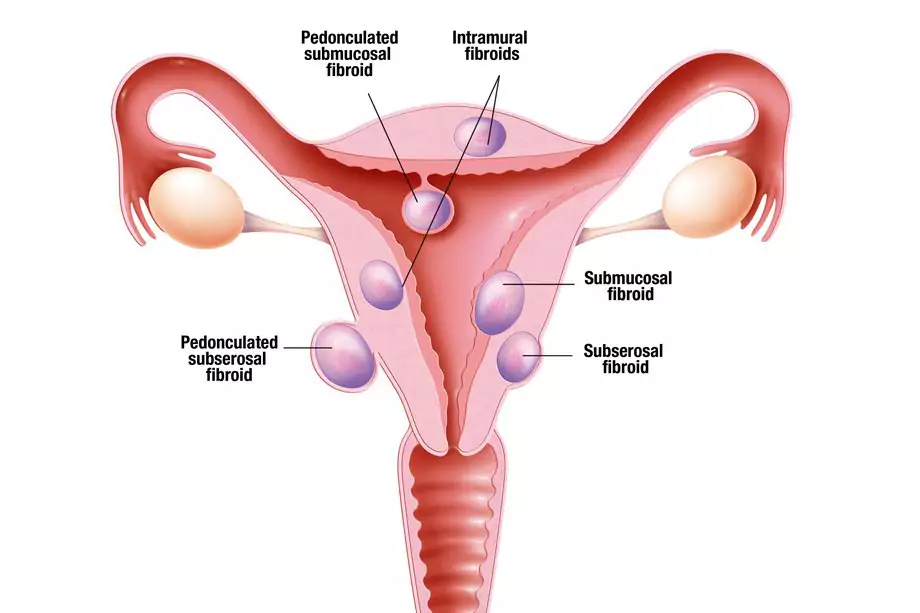
Uterine fibroids are noncancerous growths made of muscle and connective tissue that can develop in different parts of the uterus. Doctors classify fibroids based on their location because where a fibroid grows directly influences the symptoms it may cause:
- Intramural fibroids develop within the muscular wall of the uterus and are the most common type. Depending on their size, they can contribute to heavy menstrual bleeding, pelvic pain or pressure, and enlargement of the uterus.
- Submucosal fibroids grow beneath the inner lining of the uterus and extend into the uterine cavity. They are often associated with heavy menstrual bleeding, even when small.
- Subserosal fibroids grow on the outer surface of the uterus and may press against nearby organs, contributing to pelvic pressure or urinary frequency.
- Pedunculated fibroids are attached to the uterus by a thin stalk and can develop either inside or outside the uterus.
Understanding the types of fibroids and their locations helps clarify why two women with the same number of fibroids can have very different symptom experiences.
What Fibroid Mapping Reveals
Fibroid mapping provides more than a count of how many fibroids are present. A pelvic ultrasound or MRI gives the specialist a detailed view of each fibroid’s size, exact position, and relationship to the uterine cavity and surrounding structures. This process allows for a comprehensive assessment rather than a simple count.
In cases where a woman has multiple fibroids of varying sizes, fibroid mapping helps prioritize which fibroids are most likely driving symptoms and what a treatment plan should target. Our guide on fibroid sizes explains how size factors into this evaluation alongside location and count.
Does Having More Fibroids Mean Worse Symptoms?
The relationship between fibroid number and symptom severity is not straightforward. In many cases, a fibroid’s size and location matter more than the total fibroid count. A single fibroid that protrudes into the uterine cavity may cause significant bleeding, while several small fibroids elsewhere in the uterus may cause few or no symptoms at all.
Why Fibroid Location Often Matters More Than Number
A single submucosal fibroid, one that grows just beneath the inner lining of the uterus, can cause disproportionately heavy menstrual bleeding because it directly disrupts the tissue that sheds each month. In contrast, a woman with four or five small intramural fibroids that do not distort the uterine cavity may have no bleeding abnormalities at all. Subserosal fibroids tend to cause pressure symptoms rather than bleeding because they grow outward, where they may press on the bladder or bowel rather than interfering with the uterine lining.
This is why fibroid specialists look at location first, not count. A comprehensive evaluation provides an understanding of where each fibroid sits and how it affects the severity of symptoms.
When Does Multiple Fibroids Increase Symptom Severity?
There are scenarios where a higher fibroid count contributes directly to heavier symptoms. When multiple fibroids are present across different locations simultaneously, their combined effect on the uterus can be significant. Multiple intramural fibroids can enlarge the uterus overall, creating pressure and bulk symptoms that a single smaller fibroid would not generate alone.
Women with multiple uterine fibroids of different types often experience a layered pattern of symptoms – heavy bleeding from a submucosal fibroid combined with pressure and urinary frequency from a larger intramural or subserosal fibroid at the same time. In these situations, specialists refer to the total fibroid picture as fibroid burden.[2]
When a Single Fibroid Causes Significant Problems
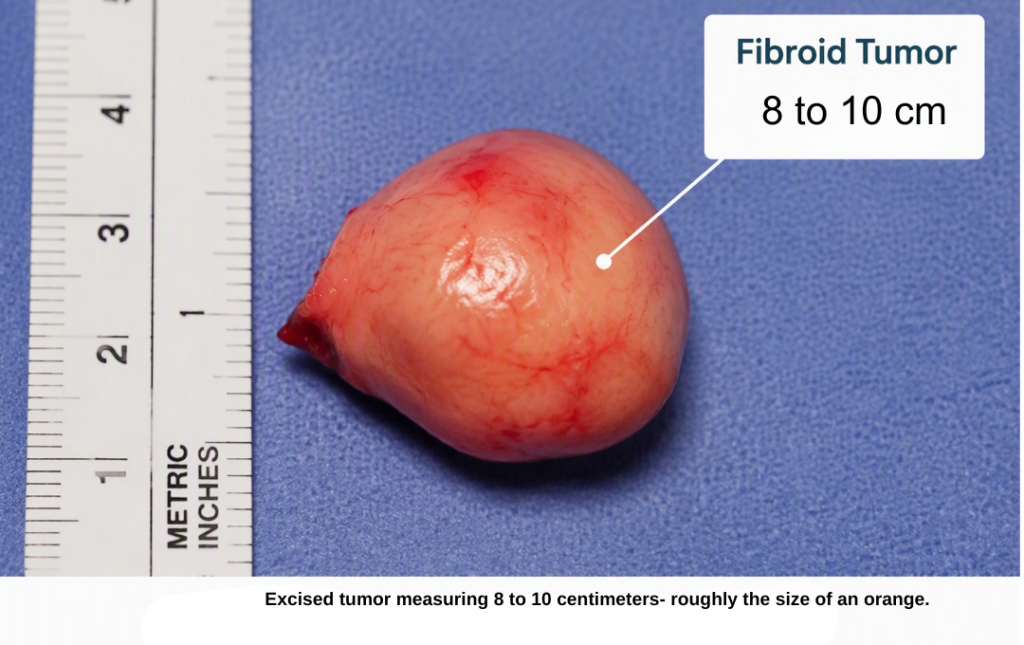
A single fibroid can be just as clinically significant as multiple fibroids depending on its size, type, and location. A large intramural fibroid measuring 8 or 10 centimeters – roughly the size of an orange or grapefruit – can distort the uterine cavity on its own, affecting menstrual flow, creating pelvic pressure, and potentially contributing to anemia from chronic blood loss. A single pedunculated submucosal fibroid can cause especially painful periods if it protrudes deeply into the uterine cavity.[3]
The word “single” does not mean minor. A woman with one fibroid should not assume her situation is automatically less serious than someone diagnosed with five.
What Is Fibroid Burden?
Fibroid burden is a term fibroid specialists use to describe the overall impact of fibroids on the uterus, factoring in the number, combined size, and locations of all fibroids present. It is a more complete way to assess severity than counting alone.
A woman with three medium-sized fibroids in different positions may carry a higher fibroid burden than a woman with a single small fibroid in a low-impact location. Conversely, a woman with one large fibroid near the uterine cavity may carry a heavier symptomatic burden than someone with many smaller fibroids in less disruptive positions.
Understanding fibroid burden helps explain why two women with the same fibroid count can have very different conversations with their specialists about appropriate next steps.
How Fibroid Count Affects Treatment Planning
While fibroid count alone does not determine symptoms, it does play a role in how specialists approach diagnosis and which imaging is appropriate. Knowing the full scope of a woman’s fibroid picture helps guide the most relevant next step.
Fibroid Count and Imaging Needs
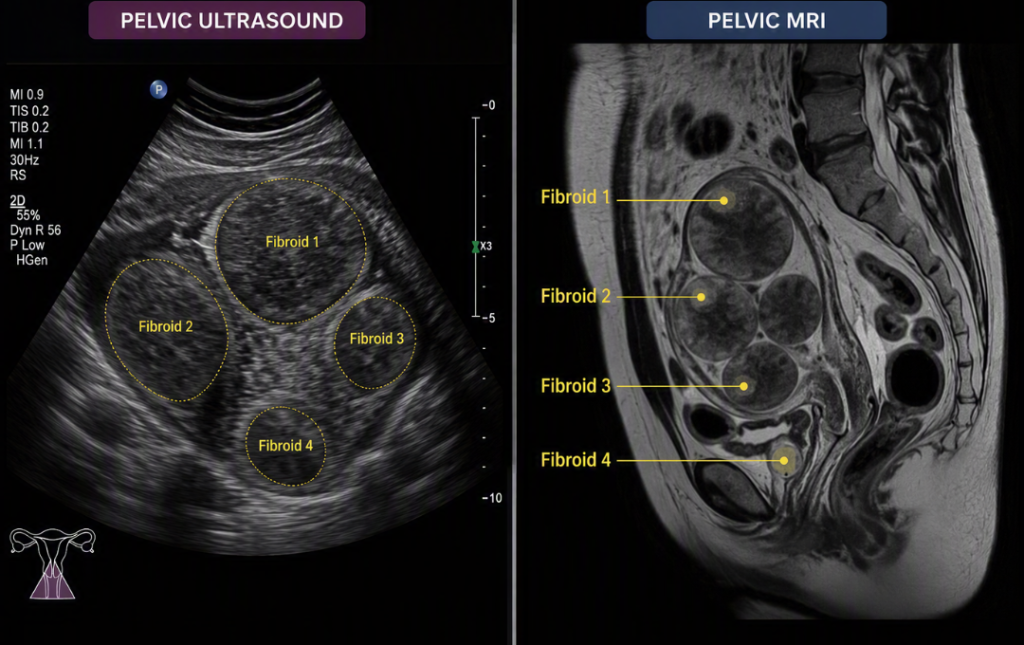
A standard pelvic ultrasound is often the first imaging test used to evaluate uterine fibroids. It can identify the presence of fibroids and provide information about their size and general location. When multiple fibroids are present – especially when they vary in size and location – a specialist may recommend an MRI for more detailed fibroid mapping. An MRI provides precise information about each fibroid’s dimensions, position relative to the uterine cavity, and proximity to surrounding structures.
This detail becomes especially important when a woman is considering treatment, since mapping all fibroids accurately helps ensure that any treatment plan addresses the full picture. Learn more about uterine fibroids to understand how specialists approach a complete evaluation.
How UFE Compares to Surgical Options for Multiple Fibroids
Uterine fibroid embolization (UFE) is a minimally invasive, outpatient procedure performed by an interventional radiologist. During the procedure, tiny particles are guided through a thin catheter into the uterine arteries to reduce blood flow to fibroids, causing them to shrink over time. UFE is image-guided, does not require an abdominal incision, and most patients return home the same day with a recovery period of approximately one to two weeks.[4]
One of UFE’s most meaningful clinical advantages is that it addresses all fibroids present in the uterus during a single procedure, regardless of how many are found. UFE works through the uterine blood supply as a whole, so it does not require individually targeting each growth. For women with multiple fibroids in different locations, this distinction matters considerably.
Two surgical approaches – myomectomy and hysterectomy – take a different path that becomes more complex when multiple fibroids are involved. A myomectomy removes individual fibroids from the uterus while preserving it. When a woman has multiple fibroids in different locations, a myomectomy may require more extensive surgical access to reach each one, carries a risk that smaller fibroids may go undetected, and new fibroids may develop in the years following the procedure.[5] Recovery from myomectomy typically involves four to six weeks of restricted activity.
A hysterectomy removes the uterus entirely, which eliminates existing fibroids. It involves major surgery with general anesthesia, a hospital stay, and a recovery period that generally ranges from four to six weeks or longer. It also permanently ends fertility.
UFE offers a non-surgical path that preserves the uterus and, for many women, may also preserve fertility options. Candidacy for UFE is determined on an individual basis after a specialist reviews imaging findings, symptom history, and treatment goals – not all patients are candidates.
Ready to have a fibroid specialist review your imaging and discuss your options?
Questions to Ask Your Fibroid Specialist
Whether a woman has one fibroid or many, the most important factors are how the fibroids are affecting her health and which treatment options align with her needs and goals. A discussion with a fibroid specialist helps put the number, size, and location of fibroids into proper clinical context.
Consider asking how many fibroids are present and where each one is located, how location is influencing your specific symptoms, whether the overall fibroid burden warrants immediate intervention or monitoring, and whether UFE is a viable option. Preparing these questions in advance shifts the conversation from a simple count to a complete understanding of your situation.
Treatment option: UFE
The Number of Fibroids Is Just the Starting Point
Whether a woman has one fibroid or many, the most important factors are how the fibroids are affecting her health and which treatment options align with her needs and goals. Fibroid count on its own does not determine what path forward makes sense – the location, size, and combined fibroid burden are what guide those decisions.
Uterine fibroid embolization (UFE) is a minimally invasive, outpatient option that can treat all fibroids present in a single session, regardless of number, without surgery and without a lengthy recovery. A fibroid specialist can help you understand whether UFE may be right for your situation.
FAQs About Uterine Fibroid Count
- Pavone D, et al. “Epidemiology and Risk Factors of Uterine Fibroids.” Reproductive Sciences, 2018. pubmed.ncbi.nlm.nih.gov/31960950/
- Office on Women’s Health, U.S. Department of Health and Human Services. “Uterine Fibroids.” womenshealth.gov/a-z-topics/uterine-fibroids
- Johns Hopkins Medicine. “Uterine Fibroids.” hopkinsmedicine.org/health/conditions-and-diseases/uterine-fibroids
- Society of Interventional Radiology. “Uterine Fibroid Embolization.” sirweb.org/patients/uterine-fibroids/
- Stewart EA, et al. “Uterine fibroids.” Nature Reviews Disease Primers, 2016. pubmed.ncbi.nlm.nih.gov/27168285/
Medical Disclaimer: This article provides educational information about uterine fibroids and treatment options. It is not a diagnosis or medical advice. Only a qualified fibroid specialist can determine whether you have fibroids or recommend appropriate treatment. If you have heavy periods, pelvic pain, or other symptoms, consult a healthcare provider or contact USA Fibroid Centers for an evaluation.