


Medically reviewed by
USA Clinics Medical Review Team
Experienced interventional radiology specialists
Reviewed: October 2026
If fibroids played a role in your miscarriage, addressing them before your next pregnancy may help. Losing a pregnancy is one of the most painful experiences a woman can go through, and it can raise difficult questions – especially when fibroids are part of the picture. Understanding how fibroids relate to pregnancy loss, and whether treating them before trying again makes sense for you, is a conversation worth having with a fibroid specialist sooner rather than later.
How Fibroids May Affect Pregnancy and Miscarriage Risk
What the Research Shows
The relationship between fibroids and miscarriage is one of the more actively debated areas in reproductive medicine. Earlier studies suggested fibroids could raise miscarriage risk by as much as 60%, and some estimates went higher. A large-scale prospective study from Vanderbilt University Medical Center, funded by the National Institute of Environmental Health Sciences and following more than 5,500 women, found a different result: the miscarriage rate was approximately 11% in both women with and women without fibroids, once age, race, and other risk factors were accounted for.[1]
More recently, a 2025 multicenter cohort study published in Ultrasound in Obstetrics and Gynecology, analyzing more than 31,000 singleton pregnancies, found that a single fibroid did not significantly raise the odds of late miscarriage – but that multiple fibroids increased those odds by approximately 2.5 times, and submucosal fibroids increased them by nearly 5 times.[2]
What this tells you: if you have experienced a miscarriage, the role fibroids played – if any – depends heavily on the number, location, and size of the fibroids involved. A blanket statement that fibroids cause miscarriage, or that they do not, is too simple. This is precisely why individual evaluation matters. For more context on how fibroids may contribute to miscarriage, the USA Fibroid Centers blog covers the subject in detail.
Which Fibroids Carry the Most Risk
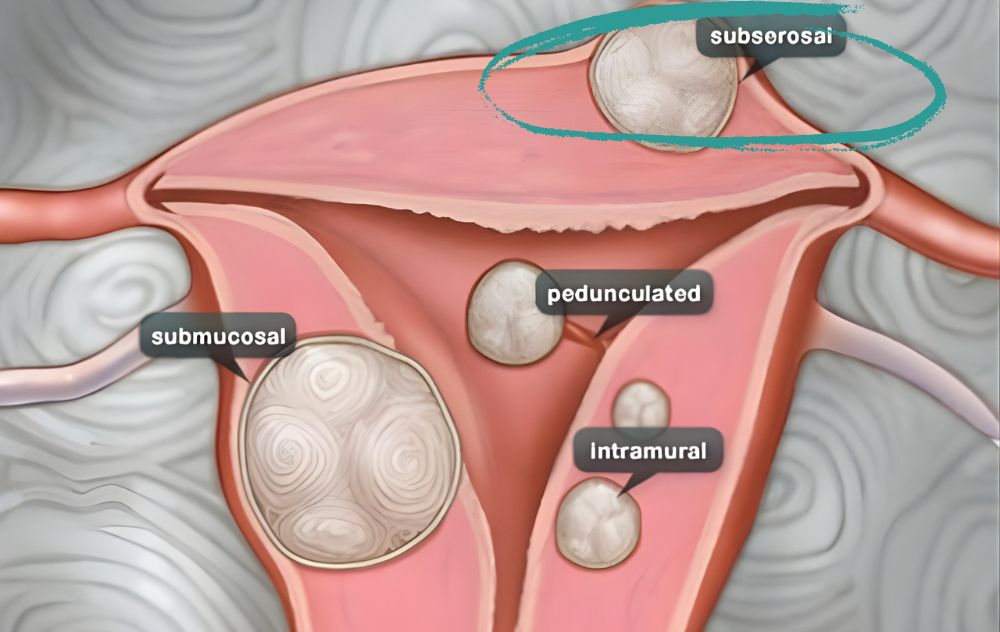
The type and location of a fibroid matter more than its presence alone. Submucosal fibroids – those that grow into the uterine cavity – carry the strongest association with pregnancy complications, including miscarriage and impaired embryo implantation. Intramural fibroids, which develop within the uterine wall, may affect the uterine environment when large or numerous. Subserosal fibroids on the outside of the uterus are generally less associated with miscarriage risk.
Women with a history of multiple or recurrent miscarriages and known fibroids may benefit from imaging to assess fibroid location and size before attempting another pregnancy.
Can Fibroids Lead to Preterm Labor and Other Complications?
Pregnancy Complications Linked to Fibroids
Beyond miscarriage, fibroids can be associated with several pregnancy complications, particularly when they are large, multiple, or located near the placenta. A 2024 meta-analysis published in BMC Pregnancy and Childbirth, reviewing data from more than 237,000 pregnancies, identified the following increased risks in women with uterine fibroids:[3]
- Preterm birth: 12.85% in pregnancies with fibroids vs. 9.43% in those without
- Cesarean delivery: approximately 61% vs. 39%
- Placental abruption: 6.28% vs. 5.51%
- Placenta previa: 2.48% vs. 0.98%
These risks do not mean a pregnancy will be complicated – the majority of women with fibroids have healthy pregnancies – but they do underscore why fibroid evaluation matters for women who have experienced pregnancy loss and are planning to try again.
What Monitoring During Pregnancy Looks Like
For women who conceive with fibroids, close monitoring is a standard part of care. Providers typically track fibroid size and location through ultrasound at regular intervals, watch for signs of preterm labor in the second and third trimesters, and in some cases refer patients to a maternal-fetal medicine specialist. Fibroids can grow during pregnancy due to elevated estrogen and progesterone levels, which occasionally causes fibroid degeneration – where the fibroid outgrows its blood supply. This can be painful but is usually manageable with appropriate care.
Thinking About Trying Again: What Are Your Options?

The decision about whether to address fibroids before another pregnancy is personal and depends on factors only you and your care team can evaluate together. Women navigating fibroids and infertility often work with both a reproductive endocrinologist and a fibroid specialist to understand how their specific fibroids may be affecting their fertility picture. If you have previously had difficulty conceiving with fibroids, the conversation about fibroid evaluation becomes even more important.
Why Some Women Consider UFE Before Another Pregnancy
For women who want to address fibroids without surgery, Uterine Fibroid Embolization (UFE) is a minimally invasive, outpatient option that works by blocking blood flow to fibroids, which can cause them to shrink over time. Because it preserves the uterus, it is sometimes considered by women who are not ready for – or do not want – a surgical approach.
Some published data suggests that women who have had UFE can go on to become pregnant. One study indicated that approximately 30% of women who underwent UFE were able to conceive within one year, with that rate rising to about 40% at two years.[4] These are not guaranteed outcomes, and candidacy for pregnancy after UFE is something each woman should discuss carefully with her fibroid specialist.
What UFE Does and Does Not Do
UFE targets the blood supply to existing fibroids. It can help shrink fibroids and reduce the symptoms they cause – including heavy bleeding and pelvic pressure. It does not prevent new fibroids from developing in the future. For women whose miscarriage was related to submucosal or multiple fibroids, a fibroid specialist can help determine whether UFE addresses the specific fibroid anatomy involved and whether the uterus would benefit from a recovery period before attempting another pregnancy.
Wondering if UFE is available near you? Find the location closest to you.
What to Ask a Fibroid Specialist After Pregnancy Loss
If you have experienced a miscarriage and fibroids are a known or suspected factor, these are worth discussing at your next evaluation:
- What type, size, and location are my fibroids?
- Could my fibroid type have contributed to my pregnancy loss?
- Would treating my fibroids before trying again be appropriate for my situation?
- Am I a candidate for UFE, and what would recovery look like?
- How long after UFE could I safely attempt pregnancy?
- What monitoring would I need during a future pregnancy?
A fibroid specialist cannot promise any particular outcome, but they can give you a clearer picture of your fibroid anatomy and help you make an informed decision about your next steps. Understanding the risk factors for fibroids is essential for early detection and treatment. Identifying risk factors allows for timely diagnosis, helping to prevent symptoms from worsening and reducing the likelihood of complications.
Take the next step
You Deserve Answers Before You Try Again
After a pregnancy loss, not knowing whether fibroids played a role – or whether they might again – can make the idea of trying again feel uncertain. Understanding your fibroid anatomy is the first step toward clarity.
Uterine Fibroid Embolization is a minimally invasive, outpatient option that preserves the uterus and does not require surgery or a lengthy recovery. A fibroid specialist can evaluate your specific situation and help you understand whether UFE may be right for you.
FAQs About Fibroids and Miscarriage
- Hartmann KE, Velez Edwards DR, Savitz DA, et al. “Prospective Cohort Study of Uterine Fibroids and Miscarriage Risk.” American Journal of Epidemiology. 2017;186(10):1140-1148. pmc.ncbi.nlm.nih.gov/articles/PMC5860279/
- Siargkas A, et al. “Association of Uterine Fibroids with Late Miscarriage: Multicenter Cohort Study.” Ultrasound in Obstetrics and Gynecology. 2025;65(2):198-205. doi:10.1002/uog.29169
- Li H, Hu Z, Fan Y, Hao Y. “The Influence of Uterine Fibroids on Adverse Outcomes in Pregnant Women: A Meta-Analysis.” BMC Pregnancy and Childbirth. 2024;24:345. doi:10.1186/s12884-024-06545-5
- National Institute of Environmental Health Sciences. “Uterine Fibroids.” niehs.nih.gov/health/topics/conditions/uterine-fibroids
Medical disclaimer: This article is for educational purposes and not a substitute for professional medical advice. USA Fibroid Centers does not diagnose medical conditions or provide treatment recommendations. Please consult a physician for medical evaluation and treatment planning. Information in this article reflects current medical understanding but is not guaranteed to be complete or accurate.