


USA Fibroid Centers Medical Review Team
This content has been reviewed by the USA Fibroid Centers medical team for patient education standards.
Reviewed July 2026
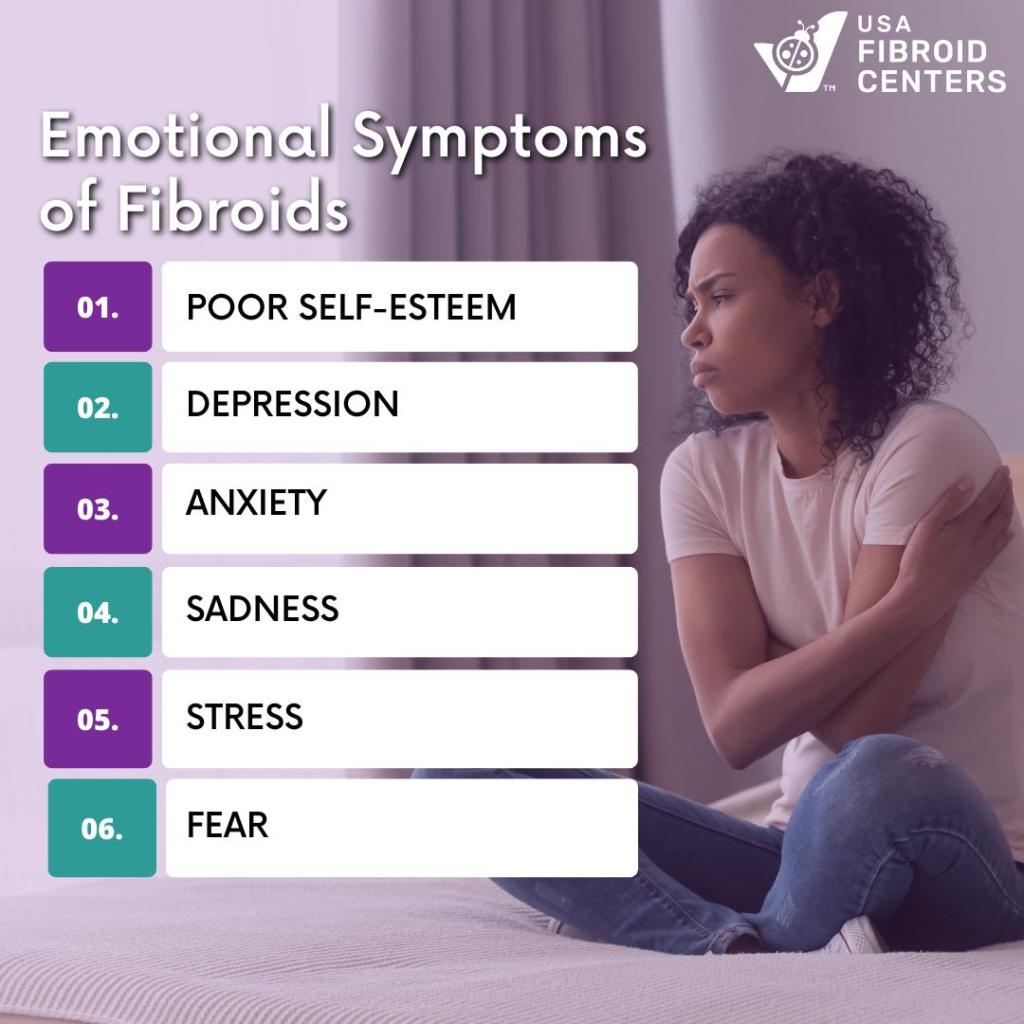
Fear, frustration, and sadness are common emotions linked to fibroids. If you have felt this way, you are not imagining it. Uterine fibroids are noncancerous growths in the uterus, and can have a significant impact on emotional well-being. Symptoms such as chronic pelvic pain, heavy or unpredictable bleeding, and poor sleep can create ongoing stress and affect daily life. In addition, fatigue caused by anemia from excessive blood loss may contribute to irritability, low energy, and difficulty coping with everyday responsibilities. Together, these physical and emotional challenges can increase feelings of anxiety, frustration, and depression for many women living with fibroids.
What Emotions Are Linked to Fibroids?
Every woman’s experience with fibroids is different. But certain feelings come up again and again.
Fear and Worry
Not knowing when heavy bleeding will start can create ongoing worry. So can wondering how large a fibroid might grow, or whether you will need treatment. Some women also worry about their long-term health or their ability to have children.
Frustration and Irritability
Living with pain, pressure, or bloating day after day can wear on your patience. It is common to feel irritable when symptoms get in the way of plans, sleep, or simple daily tasks.
Embarrassment and Self-Consciousness
Heavy or unpredictable bleeding can lead to worry about staining your clothes in public. An enlarged abdomen from fibroid growth can also change how you feel about your body.
Sadness or Low Mood
Ongoing discomfort, plus a disrupted daily life, can leave you feeling low or drained. Researchers found that women with fibroids often feel worry, fear, insecurity, and helplessness.1 Many also worry about their self-image. The study found that a lack of control over the condition is a top cause of this distress.1
Why Fibroid Symptoms Affect Your Emotions
Emotions connected to fibroids rarely come from nowhere. They are often tied directly to physical symptoms.
Pain and Discomfort
Pelvic pain, cramping, and pressure can make it hard to relax or feel like yourself. Chronic discomfort takes a toll on mood over time. You can review a full list of common fibroid symptoms to see how closely your experience matches.
Unpredictable Bleeding
Heavy or irregular periods can make it hard to plan ahead. Many women avoid social plans or travel because they worry about sudden bleeding.
Fatigue From Anemia
Heavy blood loss can lead to anemia, which causes lasting fatigue. Feeling tired all the time makes it harder to manage stress. It can also contribute to a lower mood.
Fertility Concerns
If you are trying to conceive, or hope to someday, fibroids can raise hard questions about fertility. This worry can be its own source of strain, separate from physical symptoms.
How Fibroid Symptoms Can Disrupt Daily Life
Work and Routine
Fibroid symptoms send some women home from work or school. In surveys of women with fibroids, many reported missing work entirely because of their symptoms. Others said their symptoms kept them from finishing basic tasks.
Relationships and Intimacy
Pain during intercourse, or worry about bleeding, can affect closeness with a partner. Left unaddressed, this can add strain to relationships already stretched thin by chronic symptoms.
Social Plans and Confidence
Canceling plans due to pain, fatigue, or bleeding worries can lead to a sense of isolation. Over time, this can wear down your confidence and your connection with friends and family.
Is What You’re Feeling Related to Fibroids or Something Else?
The emotions described here are a common response to living with fibroid symptoms. They are not necessarily a sign of a diagnosable mental health condition. That said, fibroids and emotional wellbeing connect in more than one way. If your mood shifts seem tied closely to your cycle and hormones, read more about fibroids and mood swings. If your symptoms feel persistent or severe, or they are getting in the way of daily life, learn more about fibroids and anxiety or depression. Talk with a healthcare provider or mental health professional if this sounds like you.
Research reviewed in a systematic review of fibroid treatment outcomes found that women with fibroids report higher rates of anxiety and depression than women without fibroids.2 The same review found that quality of life and mental health scores tend to improve after treatment.
Finding Relief for Fibroid Symptoms and the Emotions That Come With Them
Talking to a Fibroid Specialist
If fibroid symptoms are affecting how you feel, a fibroid specialist can help. They can walk you through your options and build a plan that addresses the physical symptoms driving much of the emotional strain.
Everyday Coping Strategies
Small, steady habits can help you manage day-to-day stress while you pursue treatment:
- Talk it out – Talk to a trusted friend, family member, or therapist about what you are going through.
- Relaxation techniques – Practice deep breathing or gentle stretching to ease tension.
- Track your symptoms – Keep a symptom journal to spot patterns and share with your doctor.
- Prioritize rest – A balanced diet and consistent rest can help manage fatigue.
Uterine Fibroid Embolization (UFE)
USA Fibroid Centers offers Uterine Fibroid Embolization, a minimally invasive, non-surgical treatment. UFE can shrink fibroids and help relieve the symptoms driving much of this emotional strain. It is done on an outpatient basis and skips the long recovery that comes with surgery. As symptoms ease, many women say they feel more in control and less weighed down by fibroids.
One woman’s story: Toya Johnson
Toya Johnson shared her journey with fibroids and the stress they placed on her everyday life.
FAQs About Fibroids and Emotions
Treatment option: UFE
Coping strategies help. But they do not remove fibroids.
Talking to someone you trust and practicing relaxation techniques can ease day-to-day stress, and that matters. But these strategies alone cannot shrink or eliminate uterine fibroids. If your symptoms, and the emotions tied to them, are affecting your quality of life, you deserve to know about all your options.
Uterine Fibroid Embolization (UFE) is a minimally invasive, outpatient procedure that treats fibroids directly, without surgery. Many women find that as their physical symptoms ease, the emotional weight eases too.
- Johns Hopkins Medicine, “Research Story Tip: Uterine Fibroids Can Take a Heavy Emotional Toll on Women, Study Shows,” December 2020, https://www.hopkinsmedicine.org/news/newsroom/news-releases/2020/12/research-story-tip-uterine-fibroids-can-take-a-heavy-emotional-toll-on-women-study-shows
- “The Impact of Fibroid Treatments on Quality of Life and Mental Health: A Systematic Review,” PMC, National Institutes of Health, https://pmc.ncbi.nlm.nih.gov/articles/PMC11140829/
Medical disclaimer: This article is for educational purposes only and does not constitute medical advice, diagnosis, or treatment. Always consult with a qualified healthcare provider before making changes to your treatment plan. If you are experiencing fibroid symptoms, please speak with a medical professional.