


While adenomyosis doesn’t cause traditional weight gain, it can certainly make you look and feel heavier. While adenomyosis isn’t a metabolic disorder, it can cause severe inflammatory bloating and an enlarged uterus that pushes the lower stomach outward.
Let’s clarify the link between adenomyosis and weight gain and break down the difference between true fat storage and inflammatory bloating. This will help explain why your abdomen may look larger, and when it’s time to see a specialist for relief.
Adenomyosis and Weight Gain: What’s the Connection?
When discussing weight gain in adenomyosis, it is important to understand increased body fat and the physical changes that can occur. Adenomyosis develops when the inner uterine lining grows into the muscle wall (myometrium), causing the uterus to expand to double or triple its normal size.
This trapped tissue bleeds during your menstrual cycle, often resulting in pain much more severe than a typical period. It is most common in women who have had at least one full-term pregnancy. Several factors link weight gain and adenomyosis, including hormonal imbalances, chronic inflammation, and decreased activity.
Being aware of these factors can help you manage your symptoms. If you are struggling with the adenomyosis-caused weight gain over time, learning more about the causes of adenomyosis can help you determine the best path forward for treatment.
Common Adenomyosis Symptoms
Uterine adenomyosis affects every woman differently. Since adenomyosis symptoms and signs often overlap with other conditions like fibroids or endometriosis, understanding the specific ways adenomyosis manifests is key to seeking the right treatment.
- Heavy or Prolonged Menstrual Bleeding: As the uterine wall thickens and becomes more swollen, periods often become abnormally heavy or long.
- Severe Menstrual Cramps: Unlike typical period pain, these cramps are caused by tissue growing into the uterine muscle, leading to intense inflammation and irritation that often worsens over time.
- Pelvic Pain and Pressure: Many experience a persistent sensation of fullness or heaviness in the lower abdomen. This pressure can occur even outside of the menstrual cycle due to the enlarged size of the uterus.
- Digestive Discomfort: Because the inflamed uterus exerts pressure on the intestines, it can cause IBS-like symptoms, including cramping and changes in bowel habits.
- Postmenopausal Symptoms: Some women continue to experience discomfort due to residual estrogen produced by the adrenal glands.
If these symptoms progress from mild to debilitating, it is a sign that the condition is advancing. When pain and pressure begin to interfere with your quality of life, consulting a specialist is the most effective way to regain control of your health.
Why Adenomyosis Can Make the Abdomen Look Bigger

Many women suffering from adenomyosis say that their stomachs look distended or “pooched out” even when they haven’t gained weight elsewhere. Many people refer to this as an adenomyosis belly. Since the condition causes endometrial-like tissue to grow into the muscular wall of the uterus, the organ itself can become two to three times its normal size.
Reasons why your adenomyosis stomach may appear larger include:
- Enlarged Uterus: Adenomyosis causes the walls of the uterus to thicken and harden, which makes it expand.
- Severe Bloating: Chronic inflammation in the pelvic region often leads to significant bloating. This isn’t your average “full” feeling; it’s an inflammatory response that can make your stomach feel hard and tight.
- Fluid Retention: Hormonal imbalances associated with adenomyosis can cause the body to retain extra water, contributing to a swollen sensation.
Enlarged Uterine and Inflammation
At the heart of the adenomyosis belly is a fundamental change in the structure of the uterus itself. Unlike endometriosis, where tissue grows outside the uterine cavity, adenomyosis occurs when the lining that normally stays inside the uterus grows into the surrounding muscle wall.
This infiltration causes two primary physical changes that contribute to abdominal distension, as shown below:
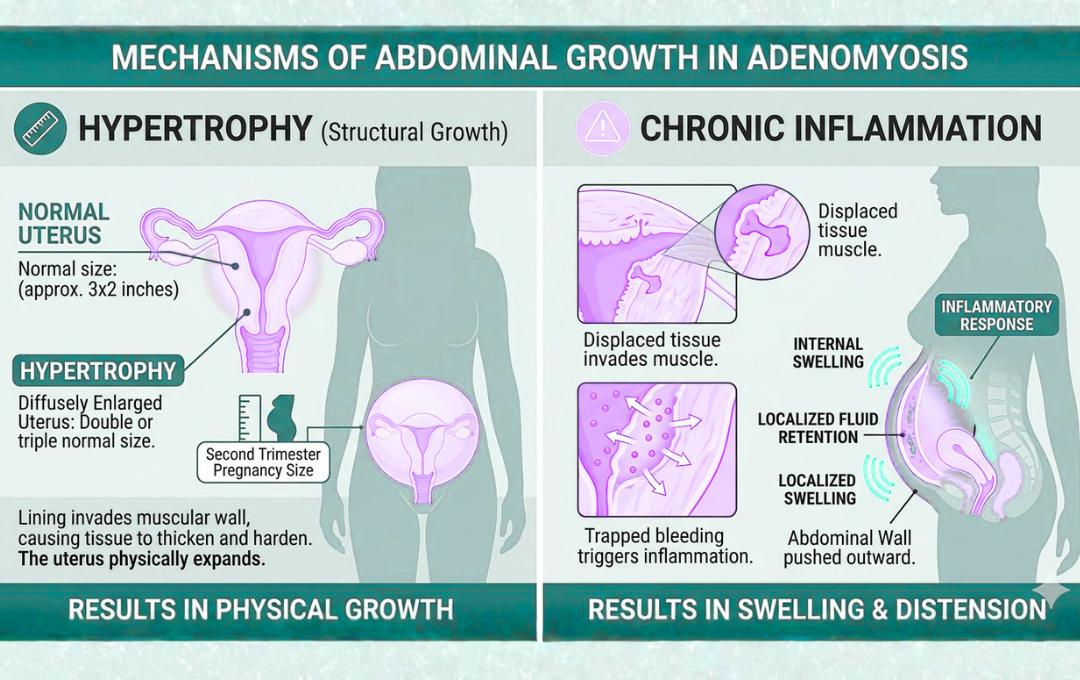
While adenomyosis is not typically life-threatening, it causes significant physical changes—sometimes causing the uterus to grow as large as a second-trimester pregnancy.
Two main factors drive these changes:
- Hypertrophy: As the uterine lining invades the muscle wall, the muscle fibers thicken and harden. This structural growth makes the uterus bulkier and creates intense physical pressure in the pelvis.
- Chronic Inflammation: Because blood becomes trapped within these muscles during each cycle, it triggers persistent inflammation and fluid retention. This internal swelling pushes the abdominal wall outward, creating a firm protrusion.
Since the uterus is a pelvic organ, its expansion directly impacts the lower abdomen. When it becomes bulkier and inflamed, it displaces surrounding organs and creates a bloated or firm protrusion that many patients describe as more than just typical gas or weight gain.
Hormonal Imbalance
Adenomyosis and weight gain are fueled by hormonal imbalance, specifically when high estrogen levels irritate the tissue trapped in the uterine wall. This surge increases abdominal size in two ways:
- Direct Irritation: Excess estrogen keeps the uterus chronically inflamed and enlarged.
- Systemic Bloating: These shifts trigger water retention and gastrointestinal sluggishness, adding a layer of fluid-based distension on top of the physical uterine growth.
Hormonal imbalance provides the fuel that turns a localized issue into the visible, uncomfortable protrusion known as adenobelly.
Fluid Retention
Beyond physical growth, “adenomyosis belly” is mostly caused by fluid buildup. The condition triggers inflammation, which makes your body send extra fluid to your pelvis to protect the area. Hormonal shifts also cause you to hold onto salt and water, making your stomach feel hard and look much larger. Unlike fat, which stays put, this fluid shifts quickly—often causing your size to change drastically between morning and night.
Constipation and Digestive Pressure
An enlarged uterus physically crowds the pelvic cavity, pressing against the bowels and slowing digestion. This pressure leads to constipation and trapped gas, causing the intestines to expand. The resulting digestive backup layers on top of the already swollen uterus, significantly increasing abdominal distension and discomfort.
Adenomyosis Weight Gain vs. Bloating: How to Tell the Difference

Distinguishing between weight gain with adenomyosis and typical fat storage depends on timing and feel:
- Speed: Adenomyosis bloating often appears suddenly, sometimes over a single afternoon. Adenomyosis and rapid weight gain usually reflect this fluid shift.
- Texture: If your abdomen feels hard or tender, it is likely inflammation. Typical weight gain feels soft or “pinchable.”
- Fluctuation: You may wake up with a flat stomach and end the day unable to button your pants. Because this is structural, it will not respond to traditional dieting.
Symptoms Linked To Belly Swelling
While the visible protrusion of an adenomyosis belly is a major concern for many, it rarely occurs in isolation. Since inflammation and uterine enlargement may also affect surrounding nerves and organs, you may notice a specific cluster of symptoms:
Along with the physical distension, women frequently experience:
- Heavy menstrual cycles,
- Intense pelvic pressure
- Deep, aching pain that can radiate to the back or legs.
When painful flare-ups accompany the belly swelling, it typically points to a structural issue within the uterus rather than a change in body fat. Recognizing adenomyosis symptoms helps you identify when the change in your weight is actually a signal from your body that it’s time to address the condition.
When to See a Doctor About Adenomyosis Symptoms
If you experience pelvic pressure or rapid abdominal swelling that persists for two to three consecutive cycles, it is time to seek a medical evaluation. Consulting a specialist as soon as possible is important, as adenomyosis is a progressive condition.
As the uterine wall thickens over time, the expanding uterus can displace surrounding organs, leading to complications like frequent urination or digestive distress. Addressing these changes now prevents symptoms from becoming debilitating and ensures more treatment options remain available.
Seeing a specialist who uses advanced imaging, such as an ultrasound or MRI, to distinguish adenomyosis from similar conditions, such as fibroids, is the fastest way to get a definite answer. If symptoms are already disrupting your work, sleep, or quality of life, an evaluation is the necessary step to explore non-surgical treatments and regain control of your health.
Treatment Options for Adenomyosis Symptoms
Managing adenomyosis depends largely on the severity of your symptoms and whether you plan to get pregnant in the future.
For mild cases, symptoms may be managed through hormonal therapies, such as birth control or progesterone-releasing IUDs, to thin the uterine lining and reduce bleeding.
The uterine artery embolization (UAE) process, also known as uterine fibroid embolization (UFE), is a non-surgical approach that targets the diseased tissue directly.
The benefits of this approach are significant:
- Minimal Access: Using a tiny nick in the skin rather than a large abdominal incision.
- Reduced Recovery Time: Most patients return to their normal activities within a week.
- Symptom Relief: By cutting off the “fuel” supply to the inflamed tissue, the uterus can return to a more normal size, significantly reducing pelvic pressure and heavy bleeding.
If you are struggling with “adenobelly” or chronic pain, uterine artery embolization offers a way to target the root cause of your symptoms with minimal downtime.
Get Trusted Adenomyosis Care at USA Fibroid Centers
The USA Fibroid Centers’ team of expert interventional radiologists are physicians who specialize in performing minimally invasive, targeted treatments using real-time medical imaging. Because they can see exactly where they are going inside the body without opening up the patient, they can offer treatments that typically involve:
- Less pain and lower risk compared to open surgery.
- Faster recovery times (often same-day discharge).
- Local anesthesia or conscious sedation rather than general anesthesia.
We understand that adenomyosis is a medical symptom that impacts your quality of life. USA Fibroid Centers can help determine if your symptoms are caused by adenomyosis or fibroids. We offer minimally invasive treatments designed to help you regain your health and get your life back on track.
Schedule A Consultation Online
FAQs
Does adenomyosis make it difficult to lose weight?
Adenomyosis does not directly prevent losing weight, but its symptoms can make the process more difficult. Chronic pelvic pain and fatigue often limit physical activity, while hormonal imbalances, specifically estrogen dominance, can influence how your body manages metabolism and water retention.
Can adenomyosis cause belly fat?
Adenomyosis does not specifically create belly fat, but it is a leading cause of “adenobelly.” This protrusion typically results from the uterus doubling or tripling in size, combined with localized inflammation and significant fluid retention, which can easily be mistaken for a sudden increase in belly fat.
How much does a uterus weigh with adenomyosis?
A uterus with adenomyosis can typically weigh 200 to 500 grams or more, depending on the severity of the growth. A healthy uterus weighs between 60 and 100 grams. In cases of adenomyosis, the uterus can become heavier due to the thickening of the muscular walls and the accumulation of trapped tissue and blood.
Can Adenomyosis Cause Rapid Weight Gain?
Adenomyosis can cause rapid weight gain due to fluid retention and inflammation rather than body fat. Since the uterus is sensitive to hormonal shifts, it can swell significantly during a flare-up, causing the midsection to expand over just a few days. This rapid change reflects the physical enlargement of the uterus and bloating, often called adenobelly, rather than a gradual increase in body mass.