


Medically reviewed by
Dr. Jacob White, M.D.
Interventional Radiology
Reviewed: October 2026
An enlarged abdomen from uterine fibroids is one of the most physically noticeable signs that fibroid growth is affecting your body. Unlike bloating that comes and goes with digestion, fibroid-related abdominal enlargement tends to be firm, persistent, and concentrated in the lower abdomen. Recognizing what is causing this change, and understanding the signs that your fibroids may be growing or symptoms may be worsening, can help you have a more informed conversation with a specialist.
Why Do Fibroids Cause the Abdomen to Expand?
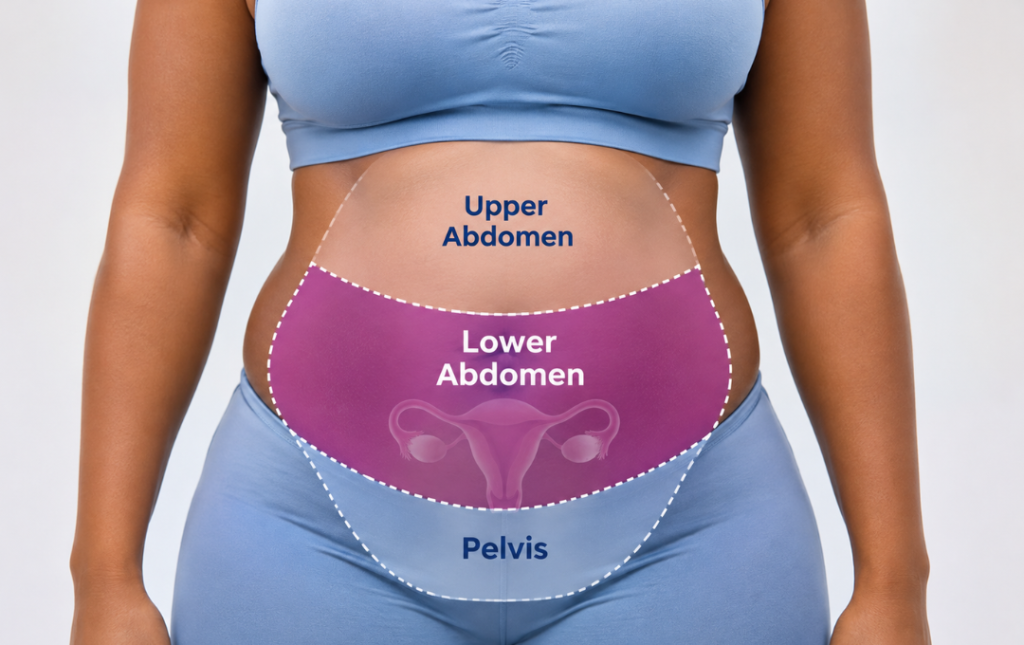
Fibroids are noncancerous growths made of muscle and fibrous tissue that develop in or on the uterus. As they grow, they increase the total volume of the uterus. Because the uterus sits in the lower pelvis, a significantly enlarged uterus has nowhere to go but upward and outward, pressing against the abdominal wall and causing the lower abdomen to extend forward.[1]
This is a structural change, which is why it behaves differently from digestive bloating. Digestive bloating shifts throughout the day and often improves with movement, rest, or changes in food intake. A fibroid-related enlarged abdomen tends to remain constant because it reflects the actual physical size of the uterus. For some women, the lower abdomen may feel firm or taut to the touch. Others describe a persistent sense of heaviness or fullness, even at rest.
As uterine fibroids grow, physicians often describe the uterus using gestational comparisons because the volume is genuinely similar. A uterus enlarged to the size of a 12-week pregnancy has expanded significantly beyond its typical pear-sized baseline. This physical expansion directly accounts for visible changes in the shape and profile of the lower abdomen.[2]
How Fibroid Type and Location Affect Abdominal Size
Not all fibroids create the same degree of visible abdominal extension. The impact on abdominal size depends significantly on fibroid type, number, and location.
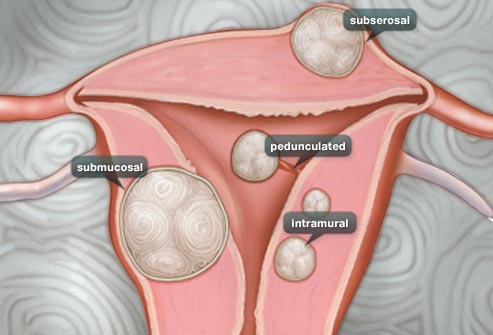
Understanding the different types of fibroids helps explain why two women with the same diagnosis can look and feel quite different. Subserosal fibroids grow outward from the outer surface of the uterus, making them more likely to press directly against the abdominal wall and create a noticeable outward protrusion. Intramural fibroids grow within the muscle wall itself and tend to cause more generalized uterine enlargement, giving the abdomen a rounded, full appearance rather than a sharp, localized bulge. Submucosal fibroids, which grow toward the inner uterine cavity, can enlarge the uterine cavity itself and are often more associated with heavy menstrual bleeding than with visible abdominal extension.
When multiple fibroids are present, or when a single fibroid reaches a larger size, the cumulative effect on uterine volume becomes more pronounced. Reviewing fibroid sizes and what they mean for the body can help frame why a smaller fibroid may cause minimal external change while larger or multiple fibroids create a substantial difference in abdominal profile.
Signs That Fibroid-Related Abdominal Growth Is Getting Worse
Fibroid-related abdominal extension does not always stay the same. In women with estrogen-driven fibroid growth during their reproductive years, the uterus and the fibroids within it can continue expanding over time. Recognizing when abdominal changes may signal fibroid progression can help you decide when to move from monitoring to evaluation.
Signs that may indicate worsening fibroid-related abdominal growth include:
- Clothes that fit progressively tighter at the waistline even if your overall weight has remained relatively stable
- A lower abdominal area that feels noticeably firmer or heavier than it did several months earlier
- Increasing bladder pressure leading to more frequent urination
- New or worsening constipation as the enlarged uterus presses against the bowel
- Heavy or longer-than-usual menstrual periods occurring alongside the abdominal changes[3]
If you have noticed several of these patterns together, discussing them with a fibroid specialist is worth considering. A progressive change in abdominal size, especially alongside worsening bleeding or pelvic pressure, suggests the fibroid load may be growing and that watchful waiting alone may not be the most effective approach.
Want to find a fibroid specialist near you? Find the location closest to you.
Other Symptoms That Often Appear With an Enlarged Fibroid Abdomen
An enlarged abdomen from fibroids rarely appears in isolation. Because a growing uterus exerts pressure in multiple directions, nearby structures are often affected at the same time. The bladder, bowel, and pelvic floor can all be compressed as the uterus expands, creating a pattern of symptoms that extends beyond abdominal size.
Many women describe this as a constant low-grade pressure in the lower abdomen and pelvis, sometimes described as a heavy or full feeling that does not ease after lying down or resting.[1] Pelvic pressure and discomfort during sex are also common accompanying symptoms caused by the physical presence of an enlarged uterus in the pelvic space.
Heavy menstrual bleeding is another frequent companion to fibroid-related abdominal extension. When fibroids enlarge the uterus or disrupt the lining, they can substantially increase menstrual blood loss, sometimes leading to anemia and fatigue that compounds the physical toll.
For a broader look at how fibroids can present across multiple body systems, see our guide on uterine fibroid symptoms to understand the full range of ways fibroids can affect daily life.
Can UFE Help Reduce an Enlarged Abdomen?
For many patients, the answer is yes. Treating the fibroids addresses the source of abdominal extension directly.
Diet and exercise cannot reduce a fibroid-related enlarged abdomen because the growth is structural, not fat or fluid. Medical treatment that reduces fibroid size is what can change abdominal volume over time.
Uterine Fibroid Embolization (UFE) is a minimally invasive, non-surgical procedure that works by blocking the blood supply to fibroids. During the procedure, an experienced interventional radiologist guides a thin catheter to the uterine arteries and injects tiny particles that restrict blood flow to the fibroids. Without an adequate blood supply, fibroids gradually shrink.
While many women experience cramping and pelvic discomfort during the initial recovery period, symptom improvement often occurs as the fibroids and uterus decrease in size over the following weeks and months. As the fibroids reduce in size, the uterus returns closer to its natural volume, which can relieve the outward pressure on the abdominal wall.[3]
Most patients notice a reduction in pelvic pressure and abdominal heaviness within the first few months after UFE. The degree of improvement in abdominal extension depends on the size and number of fibroids, and individual response to the procedure. UFE is performed on an outpatient basis, and most patients return to normal activities within one to two weeks.
If you have been noticing a persistent stomach bulge or abdominal distention that you suspect may be fibroid-related, a consultation with a fibroid specialist can help determine whether UFE may be an appropriate option.
Treatment option: UFE
A Bigger Abdomen Is Not Something You Have to Manage Alone
An enlarged abdomen from uterine fibroids is a physical, structural change driven by fibroid growth. Diet, exercise, or time will not resolve it.
UFE is a minimally invasive, outpatient procedure that targets fibroid growth directly, without the recovery of traditional surgery. A fibroid specialist at USA Fibroid Centers can help you understand whether UFE may be right for your situation.
FAQs About Fibroids and Enlarged Abdomen
- Office on Women’s Health, U.S. Department of Health and Human Services. “Uterine Fibroids.” womenshealth.gov/a-z-topics/uterine-fibroids
- National Institute of Environmental Health Sciences (NIEHS). “Uterine Fibroids.” niehs.nih.gov
- Society of Interventional Radiology. “Uterine Fibroid Embolization.” sirweb.org/patients/uterine-fibroids/
Medical Disclaimer: This article provides educational information about uterine fibroids and treatment options. It is not a diagnosis or medical advice. Only a qualified fibroid specialist can determine whether you have fibroids or recommend appropriate treatment. If you have heavy periods, pelvic pain, or other symptoms, consult a healthcare provider or contact USA Fibroid Centers for an evaluation.