
FOR IMMEDIATE RELEASE
National Provider Gives a Face to the Hidden Crisis Behind Fibroid Pain— Calling out Misinformation, Outdated Surgery and the Intruder Wrecking Women’s Lives
NEW YORK, NY, UNITED STATES, February 3, 2026 /EINPresswire.com/ — For millions of women, uterine fibroids aren’t just a diagnosis—they’re a daily disruption. Heavy bleeding that controls calendars. Fatigue that lingers no matter how much sleep they get. Pain, bloating, and bathroom trips that quietly reshape everyday life.
Yet for decades, these experiences have been minimized, mislabeled, or dismissed as “just heavy periods.”
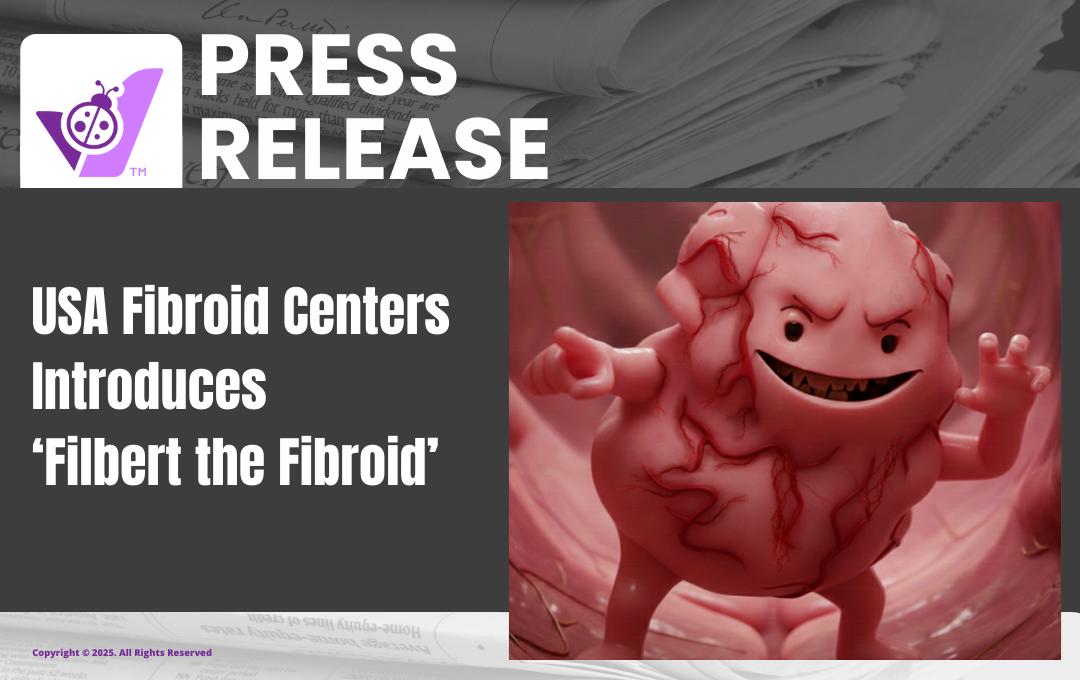
USA Fibroid Centers is changing that narrative by introducing Filbert the Fibroid—a visual, slightly irreverent representation of the very real condition affecting up to 80% of Black women and 70% of White women by age 50. Filbert the Fibroid is the unwanted squatter. The lumpy, uninvited troublemaker. The growth that drains energy, presses on organs, and forces women to plan their lives around symptoms they’re often told to tolerate. The reason that millions of women plan their lives around bathrooms, heavy bleeding, and chronic fatigue —and are still told major surgery is their best or only option.
“Fibroids have been allowed to hide behind vague language like ‘heavy periods’ for far too long,” said Yan Katsnelson, M.D., Founder and CEO of USA Fibroid Centers. By giving fibroids a face, we’re helping women recognize that what they’re feeling is real—and that they deserve clear information, compassion, choices when it comes to care and not settling for surgery and reclaim their lives.”
Filbert the Fibroid isn’t rare. He isn’t harmless. And he isn’t something women should be expected to “just live with.” Filbert is responsible for:
✔ Chronic Anemia and Iron Deficiency: Approximately 50% to 60% of women with symptomatic fibroids suffer from iron-deficiency anemia due to heavy menstrual bleeding (menorrhagia).
✔ Urinary Frequency and Bladder Compression: Up to 60% of women with large fibroids report significant urinary symptoms, including urgency and nocturia (waking up multiple times a night to use the bathroom).
✔ Abdominal Distension (“Fibroid Belly”): About 40% to 50% of women with large subserosal or intramural fibroids experience visible abdominal protrusion, mimicking a multi-month pregnancy.
Yet, despite this massive physical toll, treatment pathways remain one-sided.
While fibroids are common, awareness of treatment options has lagged behind. Data from a large cross-sectional study of more than 271,000 women with fibroids shows that most patients undergo surgical treatment, while non-surgical approaches remain less commonly discussed. This study showed the following breakdown of treatments:
✔ Hysterectomy (Major Surgery): 73.4%
✔ Myomectomy (Major Surgery): 23.1%
✔ UFE (Non-Surgical): 3.5%
“In 2026, it is unacceptable that 96% of women are still steered toward major surgery when UFE offers a non-surgical ‘eviction’,” said Dr. Katsnelson. “Filbert survives because women aren’t told they can be removed without losing their uterus.” Uterine Fibroid Embolization (UFE) is a minimally invasive, outpatient procedure performed by interventional radiologists. Using a tiny catheter thinner than a strand of spaghetti, physicians block the blood supply, causing them to shrink and be naturally absorbed by the body. Benefits include:
* No surgical incisions
* No organ removal
* No months-long recovery
Unlike surgery, UFE treats all fibroids at once, targeting the source, not the individual growths.
The launch of Filbert the Fibroid marks a broader mission: to stop normalizing suffering, challenge outdated care models, reduce stigma, and help women feel validated when something doesn’t feel right, demand transparency in women’s health.
For more information about the Filbert the Fibroid campaign and how to determine whether “Filbert” is affecting your health, visit www.USAFibroidCenters.com.
Sources:
National Institutes of Health (NIH) – “Uterine Fibroids: Statistics and Disparities.”
Journal of Minimally Invasive Gynecology (JMIG) – “Current Trends in the Management of Uterine Fibroids: A Cross-sectional Study of 271,000 Women.”
Society of Interventional Radiology (SIR) / PMC – “Symptomatic Prevalence of Uterine Leiomyomas and Impact on Quality of Life.”
About USA Fibroid Centers
USA Fibroid Centers’ mission is to provide personalized, non-surgical treatment for fibroids using Uterine Fibroid Embolization (UFE), a procedure that preserves a woman’s uterus. USA Fibroid Centers strives to raise awareness of UFE as a treatment option and encourage open conversations about fibroids. For more information, visit www.usafibroidcenters.com.