

Medically reviewed by
Dr. Jacob White, M.D.
Interventional Radiologist, Fibroid Expert, Medical Director. Reviewed: August 2026
A successful pregnancy with fibroids is possible for most women. Many women diagnosed with uterine fibroids go on to conceive naturally and deliver healthy babies. That said, the size, number, and location of your fibroids can influence fertility, pregnancy, and delivery in ways that are worth understanding – whether you are trying to conceive or are already pregnant.
If you are trying to conceive, your questions likely center on whether fibroids could affect your fertility or your ability to carry a pregnancy to term. If you are already pregnant, your concerns may be more focused on miscarriage risk, complications during pregnancy, or how fibroids might affect labor and delivery. Both are valid starting points, and the answers differ depending on where you are in the process.
Most importantly, not all fibroids affect pregnancy the same way. Some have little to no impact on conception, pregnancy, or delivery. Others, particularly those that distort the uterine cavity, are more closely associated with fertility challenges and pregnancy complications. Knowing your fibroid type is one of the most useful things you can do.
Why Fibroid Type and Location Matter
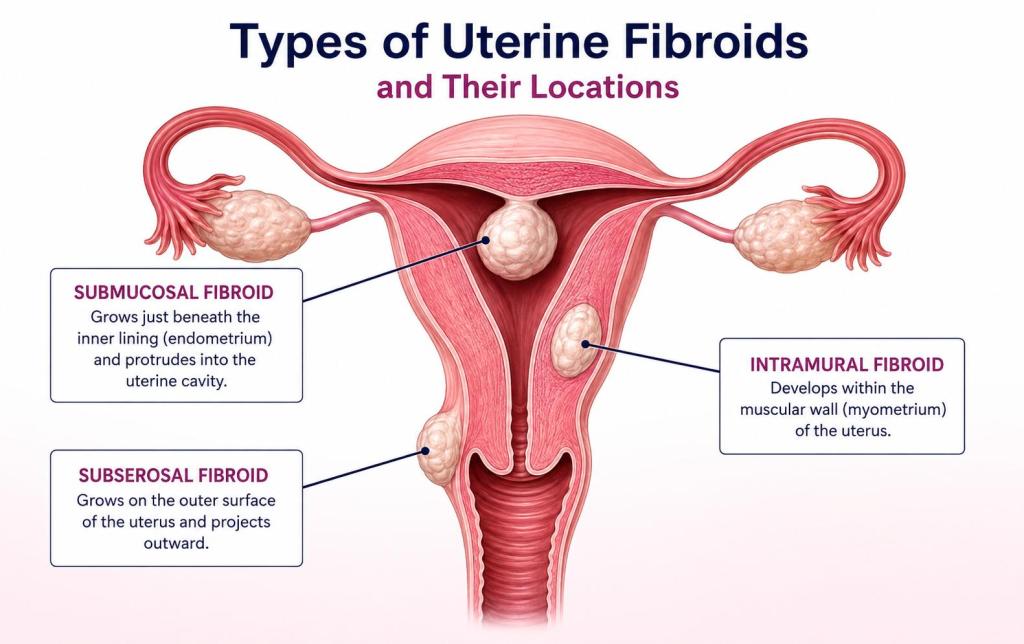
Uterine fibroids are noncancerous growths that develop from the muscle tissue of the uterus. Also called leiomyomas or myomas, they are the most common benign tumors in women of reproductive age. Their impact on pregnancy varies considerably, and in many cases they cause no pregnancy-related issues at all. The key variable is not whether you have fibroids, but where they are located and how they interact with your uterine anatomy.
Types of Fibroids and Where They Grow
Where a fibroid grows determines how much, if any, impact it may have on fertility and pregnancy:
- Submucosal fibroids develop just beneath the uterine lining and can push into the uterine cavity. These carry the highest association with fertility challenges and pregnancy complications.
- Intramural fibroids grow within the muscular wall of the uterus. Larger intramural fibroids, generally above 4 cm, may affect fertility and pregnancy outcomes.
- Subserosal fibroids grow on the outer surface of the uterus and generally have little impact on fertility or pregnancy.
Understanding your fibroid type is a key starting point. The sections below walk through how that distinction applies depending on where you are in your family planning journey.
Does It Matter Whether You Are Trying to Conceive or Already Pregnant?
Yes – and the distinction shapes how fibroids are managed and what questions to prioritize.
If You Are Trying to Conceive With Fibroids
Most women with fibroids are able to become pregnant naturally. Fibroids may be associated with infertility in an estimated 5% to 10% of women with the condition, and they may be the sole cause of infertility in approximately 2% to 3% of cases.[2] That means the large majority of women with fibroids can conceive without infertility treatment.
However, certain fibroid types – particularly submucosal fibroids and larger intramural fibroids – may interfere with embryo implantation or distort the uterine cavity in ways that make conception more difficult. If you have fibroids and are struggling to conceive, speaking with a fibroid specialist may help determine whether treatment before pregnancy could improve your chances. For a deeper look at the mechanisms involved, our resource on fibroids and infertility covers this subject in more detail.
If You Are Already Pregnant With Fibroids
For women who are already pregnant, fibroid treatment is not typically performed because of the potential risks to the pregnancy. Management instead focuses on monitoring – tracking fibroid size, location, and behavior, watching for symptoms, and coordinating with your obstetrician throughout pregnancy. Most women go on to have healthy pregnancies and deliveries. If your pregnancy is considered higher risk because of your fibroids, your care team will develop a monitoring plan specific to your situation.
How Fibroids Can Affect Fertility
Submucosal fibroids can interfere with the uterine lining in ways that make it harder for an embryo to implant successfully. Fibroids that grow into the uterine cavity or near the openings of the fallopian tubes may physically obstruct the path of sperm or a fertilized egg. Larger intramural fibroids may alter the shape of the uterine cavity and affect blood flow to the endometrium, the lining where an embryo needs to attach.
Subserosal fibroids, which grow on the outside of the uterus, are generally not associated with reduced fertility.
Fibroids are more likely to affect conception when they are submucosal, intramural and larger than 4 cm, multiple rather than a single isolated fibroid, or positioned near the lower portion of the uterus or fallopian tube openings. If you are experiencing fibroid symptoms that concern you, or have been struggling to conceive with a known fibroid diagnosis, a specialist can evaluate your specific situation.
Can Fibroids Cause Complications During Pregnancy?

Most pregnancies that involve fibroids are uncomplicated. Research published in the International Journal of Gynecology and Obstetrics in 2026 found that complications are more likely when fibroids are multiple, larger than 5 cm, or located in the lower uterine segment.[1] Between 10% and 30% of pregnant women with fibroids experience some form of complication during pregnancy, labor, or the postpartum period.[1]
For a broader look at how fibroids may behave across each stage of pregnancy, our article on how fibroids affect each trimester provides trimester-specific detail.
What Pregnancy Complications Can Fibroids Cause?
Potential complications associated with fibroids in pregnancy may include placental abruption, placenta previa, preterm delivery, fetal growth restriction if the fibroid occupies space where the baby is developing, increased likelihood of cesarean delivery, and postpartum hemorrhage. These complications are possible but not guaranteed, and many women with fibroids experience none of them.
What Happens to Fibroids During Pregnancy?
Fibroid behavior during pregnancy varies. Some fibroids grow slightly during the first trimester due to elevated estrogen and progesterone levels. Others remain stable or shrink. Research shows that in approximately 70% of women who have a live birth, fibroids decrease in volume by more than 50% between early pregnancy and three to six months postpartum.[3] This postpartum reduction is most pronounced in submucosal fibroids.
One complication specifically linked to fibroid changes during pregnancy is red degeneration, where a fibroid outgrows its blood supply. This can cause significant abdominal pain and most often occurs during the second trimester. If you experience sudden pelvic or abdominal pain during pregnancy and have a known fibroid diagnosis, contact your care team promptly.
Can Fibroids Affect Labor and Delivery?
Many women with fibroids have successful vaginal deliveries and do not require a cesarean section solely because fibroids are present. Fibroid size and location can sometimes influence labor and delivery planning, though the outcome depends heavily on individual circumstances.
Large fibroids located in the lower portion of the uterus may affect the baby’s position or partially obstruct the birth canal, making vaginal delivery more difficult. Certain fibroid locations have also been associated with an increased likelihood of cesarean delivery. If your fibroids are in a location that could affect delivery, your obstetrician will factor this into your birth plan and discuss the options most appropriate for your case.
Because delivery considerations are relevant to women planning a family, understanding fibroid size and location before conception may help inform decisions about monitoring or treatment before pregnancy begins.
At What Stage Can Fibroids Cause Miscarriage?
Fibroids can be associated with pregnancy loss at different stages, though the risk depends heavily on fibroid type and number. For more detail on the mechanisms involved, our dedicated article on can fibroids cause miscarriages covers this topic specifically.
First and Second Trimester Risk
Early miscarriage risk may be higher when fibroids interfere with embryo implantation in the uterine lining. In the second trimester, risk is more associated with fibroids that alter uterine blood flow or create mechanical pressure on the developing fetus.
Why Submucosal Fibroids Carry the Highest Risk
A multicenter cohort study published in Ultrasound in Obstetrics and Gynecology in 2025 found that submucosal fibroids were associated with approximately 4.7 times higher odds of late miscarriage compared to pregnancies without fibroids.[4] Women with multiple fibroids also showed significantly higher odds of late miscarriage – approximately 2.5 to 2.9 times higher compared to those without fibroids.[4] Subserosal fibroids and single intramural fibroids not distorting the uterine cavity showed little to no statistically significant association with miscarriage in the same study.
This reinforces the central point: fibroid type and location, not simply the presence of fibroids, is the most important factor when evaluating pregnancy risk.
Managing Fibroids Before and After Pregnancy
The approach to fibroid management looks different depending on whether you are preparing to conceive or recovering after delivery. In both cases, a fibroid specialist can help you understand your options and what monitoring may be appropriate.
Talking to a Fibroid Specialist Before You Conceive
Not every woman with fibroids needs treatment before pregnancy. However, women with submucosal fibroids, large fibroids that distort the uterine cavity, recurrent pregnancy loss, fertility challenges, or fibroids that may affect labor and delivery may benefit from discussing treatment options before conceiving.
A fibroid specialist can evaluate fibroid type, size, and location using imaging and help you understand whether pre-conception treatment is worth considering. Uterine fibroid embolization (UFE) is a minimally invasive, image-guided, outpatient option that reduces fibroid size by cutting off the blood supply to the fibroids. UFE preserves the uterus and has been associated with improved quality of life for women with fibroid-related symptoms. Pregnancy after UFE is possible, and discussing your family planning goals with your care team before undergoing any treatment is an important part of that conversation.
Treatment Planning After Delivery
For women who are pregnant when fibroids are discovered, fibroid treatment is generally not performed during pregnancy due to the risks involved. This differs from the pre-pregnancy period, when treatment may be considered for fibroids that are affecting fertility or are expected to increase pregnancy or delivery risks.
After delivery, most care teams recommend waiting several months before evaluating fibroid treatment options, as the uterus returns to a more normal size and some fibroids may reduce in volume on their own during the postpartum period. Once recovered, a fibroid specialist can assess whether uterine fibroid embolization (UFE) or another option may be appropriate for your goals, including plans for additional pregnancies.
Treatment option: UFE
Your Fibroids Do Not Have to Define Your Path to Pregnancy
Navigating a fibroid diagnosis while planning a family raises real questions – and those questions deserve thoughtful answers from a specialist who understands both fibroid treatment and your pregnancy goals. For many women, monitoring is the right first step. For others, addressing fibroids before or after pregnancy may help manage symptoms and support a healthier path forward.
Uterine fibroid embolization (UFE) is a minimally invasive, outpatient, image-guided treatment that reduces fibroid size without surgery. A fibroid specialist can help you understand whether UFE may be right for your situation.
FAQs About Pregnancy With Fibroids
- Ramasauskaite D, et al. “Fibroids and pregnancy.” International Journal of Gynecology and Obstetrics. 2026 Jan;172(1):51-58. doi: 10.1002/ijgo.70612. PMC12724024.
- Donnez J, Dolmans MM. “Uterine fibroid management: from the present to the future.” Human Reproduction Update. 2016;22(6):665-686.
- Ramasauskaite D, et al. “Fibroids and pregnancy.” International Journal of Gynecology and Obstetrics. 2026 Jan;172(1):51-58. doi: 10.1002/ijgo.70612.
- Siargkas A, et al. “Association of uterine fibroids with late miscarriage: multicenter cohort study.” Ultrasound in Obstetrics and Gynecology. 2025 Feb;65(2):198-205. doi: 10.1002/uog.29169. PubMed 39894923.
Medical Disclaimer: This article provides educational information about uterine fibroids and treatment options. It is not a diagnosis or medical advice. Only a qualified fibroid specialist can determine whether you have fibroids or recommend appropriate treatment.