

Experiencing unexpected bleeding outside your regular menstrual cycle can be alarming and unsettling. What breakthrough bleeding is can be described as any light spotting or bleeding that may occur between periods.
While often common but temporary, breakthrough bleeding on the pill is a key reason why many women seek medical advice. It’s important to monitor any changes in your menstrual cycle, as they can indicate an underlying condition such as uterine fibroids or adenomyosis. Understanding the source of irregular bleeding is the first step toward finding relief.
How Long Does Breakthrough Bleeding Last?

How long does breakthrough bleeding last is a primary concern for those experiencing it. Most commonly, an episode lasts for 1–3 days. If the spotting is related to starting or changing hormonal birth control, it can persist intermittently during the first 2–3 months of adjustment. After this initial phase, the spotting should stop as your body acclimates to the hormones. Persistent, heavy, or escalating breakthrough bleeding may suggest an underlying issue beyond simple hormonal adjustment, warranting a closer look at structural causes.
Symptoms of Breakthrough Bleeding
Understanding what causes breakthrough bleeding is important for determining the appropriate course of action. Reasons for breakthrough bleeding can be generally classified into two categories: hormonal fluctuations (especially from birth control) and structural or pathological conditions in the uterus or cervix.
Birth Control Methods and Spotting
Hormonal contraception is a very common source of spotting, often referred to as a breakthrough period or breakthrough bleeding. This type of bleeding usually stabilizes after an adjustment period.

- Combined Oral Contraceptives: Spotting is highly common during the first two to three cycles as the body adjusts to the hormonal dose. Consistent daily timing is critical; missed or late pills can often trigger episodes of breakthrough bleeding on the pill.
- Progestin-Only Pill (POP): Often called the mini-pill, this pill has a very narrow window for dosing. Taking a POP late often disrupts the lining and triggers contraceptive pill breakthrough bleeding.
- Hormonal IUD (Mirena, Skyla, etc.): Intermittent irregular bleeding or spotting is common for the first three to six months. Sudden heavy bleeding or pain after this period warrants checking the IUD’s position.
- Copper IUD (Paragard): Though non-hormonal, the copper IUD may increase both menstrual flow and intermenstrual spotting, especially in early cycles.
- Implant or Injection: Irregular but often light spotting is a hallmark of the early months after receiving an implant or injection. Many users report that their bleeding decreases or stops completely over time.
Uterine and Cervical Conditions
When breakthrough bleeding is persistent or heavy, an underlying uterine or cervical condition may be the cause, such as:
- Uterine Fibroids: These common, non-cancerous growths on the uterus can significantly impact a woman’s menstrual cycle. Submucosal or intramural fibroids, in particular, can disrupt the uterine lining (endometrium) and lead to irregular bleeding, spotting or heavy bleeding between cycles.
- Adenomyosis: This condition involves endometrial tissue growing into the muscular wall of the uterus. Adenomyosis often leads to heavy, painful periods but can also cause breakthrough bleeding between cycles. Diagnosis may involve imaging like ultrasound or MRI.
- Endometrial Polyps: These localized overgrowths of the uterine lining are a very common cause of spotting between periods or bleeding after intercourse.
- Endometritis or Pelvic Infection: Inflammation or infection of the uterine lining can cause intermenstrual spotting, often accompanied by pelvic pain or changes in discharge.
- Cervical Causes: Conditions like cervicitis, cervical ectropion, or cervical polyps can lead to contact bleeding (bleeding after sex or a pelvic exam) and irregular spotting.
- Endocrine Disorders: Systemic issues like thyroid disease (hypo- or hyperthyroidism) and hyperprolactinemia can dysregulate the hormonal cycle, causing unpredictable and unscheduled bleeding.
See If Your Symptoms Are Related to Fibroids
What Does Breakthrough Bleeding Look Like?
What does breakthrough bleeding looks like can vary from person to person, but it is typically characterized as light spotting or bleeding that occurs outside of your expected period window.
Unlike a full menstrual flow, which tends to be heavier and follow a predictable cycle pattern, breakthrough bleeding is usually lighter and does not adhere to your normal schedule. This distinction is key when considering breakthrough bleeding vs. period.
If you are concerned about persistent unscheduled bleeding, it is important to track its frequency and volume. In cases related to fibroids, such as submucosal fibroids, you might notice small clots or slightly heavier “spotting” episodes compared to the light bleeding associated with contraceptives.
Breakthrough Bleeding Colors and Textures
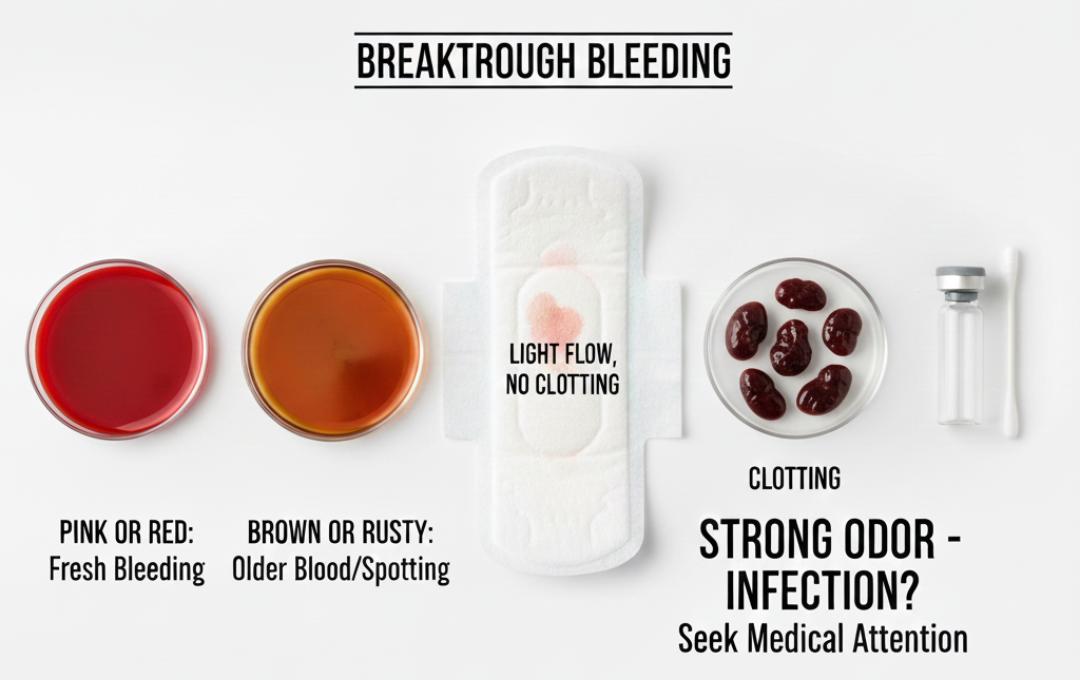
One of the most common questions is what color is breakthrough bleeding? The color can often indicate how fresh the blood is:
- Pink or Red: This suggests fresh bleeding, where the blood has exited the body relatively quickly.
- Brown or Rusty: This indicates older blood that has taken longer to pass through the uterus and vagina, often appearing as old spotting.
The texture is typically a light flow with little to no clotting, unlike a heavier menstrual period. However, strong or unusual odors that accompany any intermenstrual bleeding may indicate a pelvic infection or other vaginal bacterial infections and require immediate medical evaluation.
Period Blood Color and What it Means
When to Worry About Breakthrough Bleeding
While light spotting on birth control is usually normal, knowing when it can happen and when to worry about breakthrough bleeding is crucial for protecting your health.
If your breakthrough bleeding continues beyond the usual adjustment window (3 months) or if you experience escalating symptoms like increasing frequency, heavier flow, or the new onset of pelvic pressure, it may be signs of fibroids or polyps. Discovering the source of your bleeding is the first step to long-term relief and effective treatment.
Breakthrough Bleeding Diagnosis and Fibroid Treatment

How to stop breakthrough bleeding depends entirely on its underlying cause. A proper diagnosis always begins with a detailed medical history and symptom tracking, including the timing, color, volume, and triggers of the bleeding, as well as your contraception use and missed doses.
If the bleeding is due to treatable causes such as infections or thyroid issues, those conditions will be addressed first. However, if breakthrough bleeding is severe or linked to structural conditions like fibroids or adenomyosis, a proper diagnosis through advanced imaging may be needed.
USA Fibroid Centers offers advanced, non-invasive imaging techniques to confirm the presence of fibroids and determine if they are the source of your bleeding.
Treatments to Stop Breakthrough Bleeding From Uterine Fibroids
For individuals diagnosed with uterine fibroids or adenomyosis as the cause of their intermenstrual bleeding, surgical removal (myomectomy or hysterectomy) is not the only option. USA Fibroid Centers specializes in minimally invasive, non-surgical treatment options known as uterine fibroid embolization (UFE) or uterine artery embolization (UAE).
UFE is a proven, non-surgical treatment that blocks the blood flow to the fibroids, causing them to shrink and die. This is an office-based procedure that preserves the uterus and provides long-term relief from painful fibroid symptoms, including breakthrough bleeding.
You don’t have to put your life on hold while waiting for your next cycle to end. Choosing UFE means choosing a treatment that respects your body’s anatomy and your busy schedule. Because this is an outpatient procedure, you can recover in the comfort of your home and return to your favorite activities within days—not weeks. Taking back control of your health begins with a simple conversation to determine if UFE is the right solution for your breakthrough bleeding.
FAQs About Breakthrough Bleeding
Is breakthrough bleeding a period?
No, breakthrough bleeding is not a period. Breakthrough bleeding is unscheduled, light bleeding that happens outside the regular cycle. A period is the predictable, heavier shedding of the uterine lining that occurs at the end of a typical 21-to-35-day cycle.
Is breakthrough bleeding a sign of pregnancy?
Breakthrough bleeding can be a sign of pregnancy, but not always. Light spotting, often pink or brown, that occurs around the time a period is due can be a sign of implantation bleeding, which happens when a fertilized egg attaches to the uterine wall. While breakthrough bleeding vs implantation bleeding can look similar, implantation bleeding is a one-time event that typically lasts only a day or two. If you suspect pregnancy, take a test.
Am I still protected from pregnancy if I have breakthrough bleeding on birth control?
You are still protected from pregnancy if you are taking hormonal birth control correctly and consistently (i.e., not missing pills or patches), even if you experience breakthrough bleeding. The bleeding indicates a hormonal shift or endometrial adjustment, not a failure of the contraceptive protection. Protection failure usually occurs when doses are missed.
Does breakthrough bleeding stop on its own?
Breakthrough bleeding may stop on its own, depending on the cause. If the bleeding is due to starting or switching hormonal birth control, it is highly likely to stop on its own within two to three months. If the cause is a structural issue, such as a large fibroid, the bleeding will likely continue or worsen until the underlying condition is addressed and treated.