


Medically reviewed by
Dr. Jacob White, MD
Interventional Radiologist, Fibroid Specialist and Medical Director
Reviewed: September 2026
Breakthrough bleeding is spotting or light bleeding that shows up between your regular periods. It can catch you off guard, especially if you are not on hormonal birth control or have never had irregular bleeding before. Most of the time it is temporary and tied to a hormone shift, but persistent or heavy episodes can point to something structural, like uterine fibroids, that is worth a closer look.
What Is Breakthrough Bleeding?
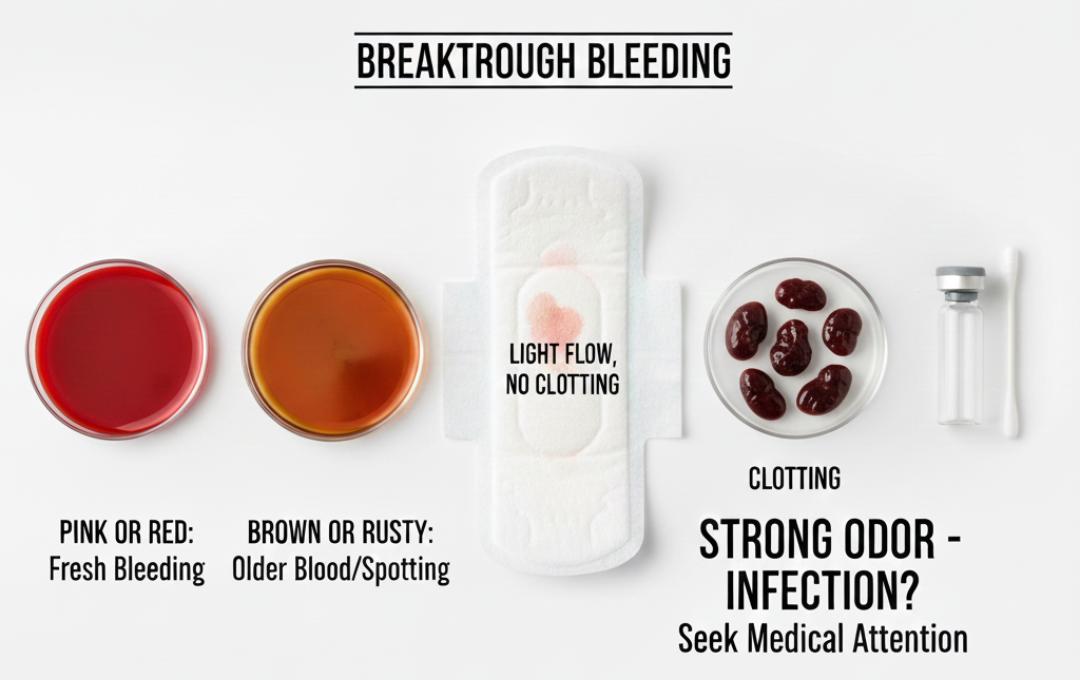
Breakthrough bleeding is any bleeding or spotting that happens outside your expected period window.[1] It is usually lighter than a normal period and does not follow the same buildup and taper pattern that menstrual bleeding does. Most people notice it as light spotting on toilet paper or underwear, though it can occasionally be heavy enough to need a pad or liner.
Breakthrough bleeding is most often linked to hormonal birth control, since methods like the pill, patch, implant, or hormonal IUD change how the uterine lining builds and sheds.[2] It can also happen for other reasons, including changes tied to pregnancy, certain medications, or an underlying uterine condition such as fibroids.
Breakthrough Bleeding vs. Period: What Is the Difference?
A period tends to follow a pattern. It starts light, becomes heavier for a day or two, then tapers off over several days.[1] Breakthrough bleeding does not follow that pattern. It tends to be random, lighter overall, and can appear as pink, red, or brown spotting at any point in your cycle.
Color can offer a clue about timing. Pink or red spotting usually means the blood is fresh, while brown or rust-colored spotting suggests it has been in the body longer before appearing. Tracking when the bleeding happens, how heavy it is, and what it looks like can help you and your provider tell breakthrough bleeding apart from a true period or a sign of a heavier bleeding pattern.
What Causes Breakthrough Bleeding?

Hormonal Birth Control
Hormonal birth control is the most common reason for breakthrough bleeding.[2] Combined pills, progestin-only pills, hormonal IUDs, implants, and injections can all cause intermittent spotting, especially during the first two to three months as your body adjusts to the hormone dose. Missing a dose or taking a pill late can also trigger an episode. For most people, this type of spotting settles down within a few cycles.
Uterine Fibroids
When breakthrough bleeding does not settle down, or when it is heavier than typical spotting, a structural cause in the uterus may be involved. Uterine fibroids are non-cancerous growths that can disrupt the uterine lining and lead to irregular bleeding between cycles, particularly when a fibroid sits close to or within the lining itself.[3]
Adenomyosis
Adenomyosis, a condition in which tissue similar to the uterine lining grows into the muscular wall of the uterus, can also cause heavy, painful periods along with breakthrough bleeding.
Other Causes
Endometrial polyps, which are small overgrowths of the uterine lining, are a common cause of spotting between periods or after intercourse. Inflammation or infection of the uterine lining can also cause intermenstrual spotting, often along with pelvic pain or changes in discharge. Because several conditions can look similar from the outside, a fibroid specialist typically starts with imaging, such as an ultrasound, to help identify the source.
Wondering if a fibroid specialist near you could help identify the cause of your bleeding? Find the location closest to you.
How Long Does Breakthrough Bleeding Last?
Most episodes of breakthrough bleeding last only one to three days. If the spotting is related to starting or changing hormonal birth control, it can come and go over the first two to three months while your body adjusts, then taper off as your hormone levels stabilize.
Breakthrough bleeding that continues well past this adjustment window, or that becomes heavier, more frequent, or accompanied by new pelvic pressure, may point to a cause beyond a simple hormonal shift. At that point, it is worth having a fibroid specialist take a closer look rather than waiting it out.
When Breakthrough Bleeding May Signal Fibroids
Persistent or escalating breakthrough bleeding is one of the more common signs that fibroids may be affecting your uterine lining. Submucosal or intramural fibroids in particular can disrupt the lining directly, leading to spotting or heavier bleeding between cycles.[3] Over time, this kind of ongoing blood loss can also contribute to iron deficiency anemia, which can leave you feeling fatigued even when the bleeding itself feels manageable.
If you are already dealing with heavy periods alongside unpredictable spotting, it may help to read more about how bleeding between periods relates to fibroids, or explore practical ways to help manage fibroid-related bleeding. A fibroid specialist can confirm whether fibroids are contributing to your symptoms and walk you through options, including Uterine Fibroid Embolization (UFE), a minimally invasive, image-guided procedure that works by reducing blood flow to fibroids so they can shrink over time.[3]
Treatment option: UFE
You Do Not Have to Guess What Is Causing Your Bleeding
Occasional light spotting tied to birth control is common and usually resolves on its own. But bleeding that keeps returning, gets heavier, or comes with pelvic pressure deserves a closer look, since fibroids can be an underlying cause.
A fibroid specialist can help you understand what is behind your symptoms and whether Uterine Fibroid Embolization may be an appropriate next step for you.
FAQs About Breakthrough Bleeding
- Cleveland Clinic, “Breakthrough Bleeding,” my.clevelandclinic.org/health/symptoms/breakthrough-bleeding
- American College of Obstetricians and Gynecologists (ACOG), “What You Should Know About Breakthrough Bleeding With Birth Control,” acog.org
- Society of Interventional Radiology, “Uterine Fibroid Embolization,” sirweb.org/patients/uterine-fibroids/
Medical Disclaimer: This article provides educational information about breakthrough bleeding and uterine fibroids. It is not a diagnosis or medical advice. Only a qualified fibroid specialist can determine the cause of your bleeding or recommend appropriate treatment. If you have persistent or heavy bleeding, or other concerning symptoms, consult a healthcare provider or contact USA Fibroid Centers for an evaluation.